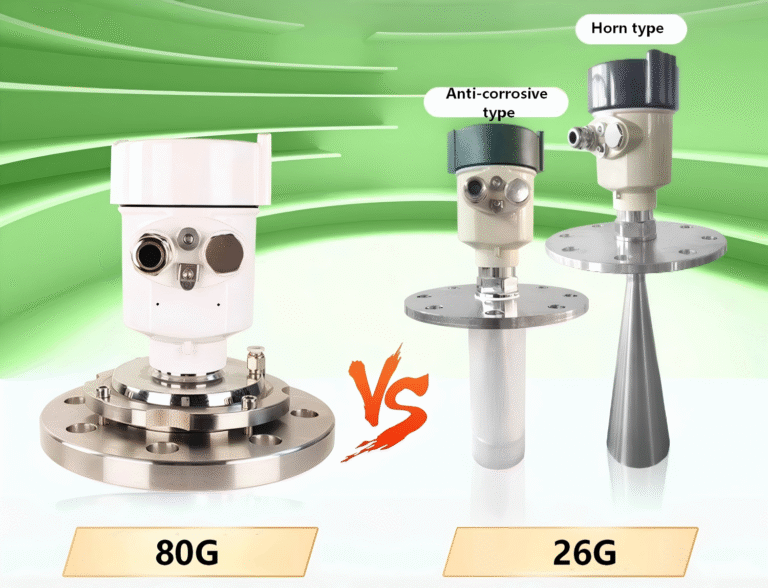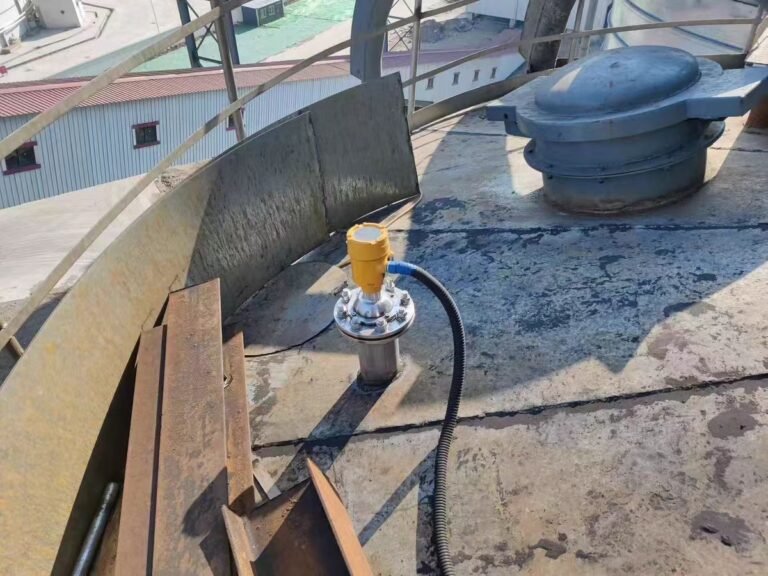
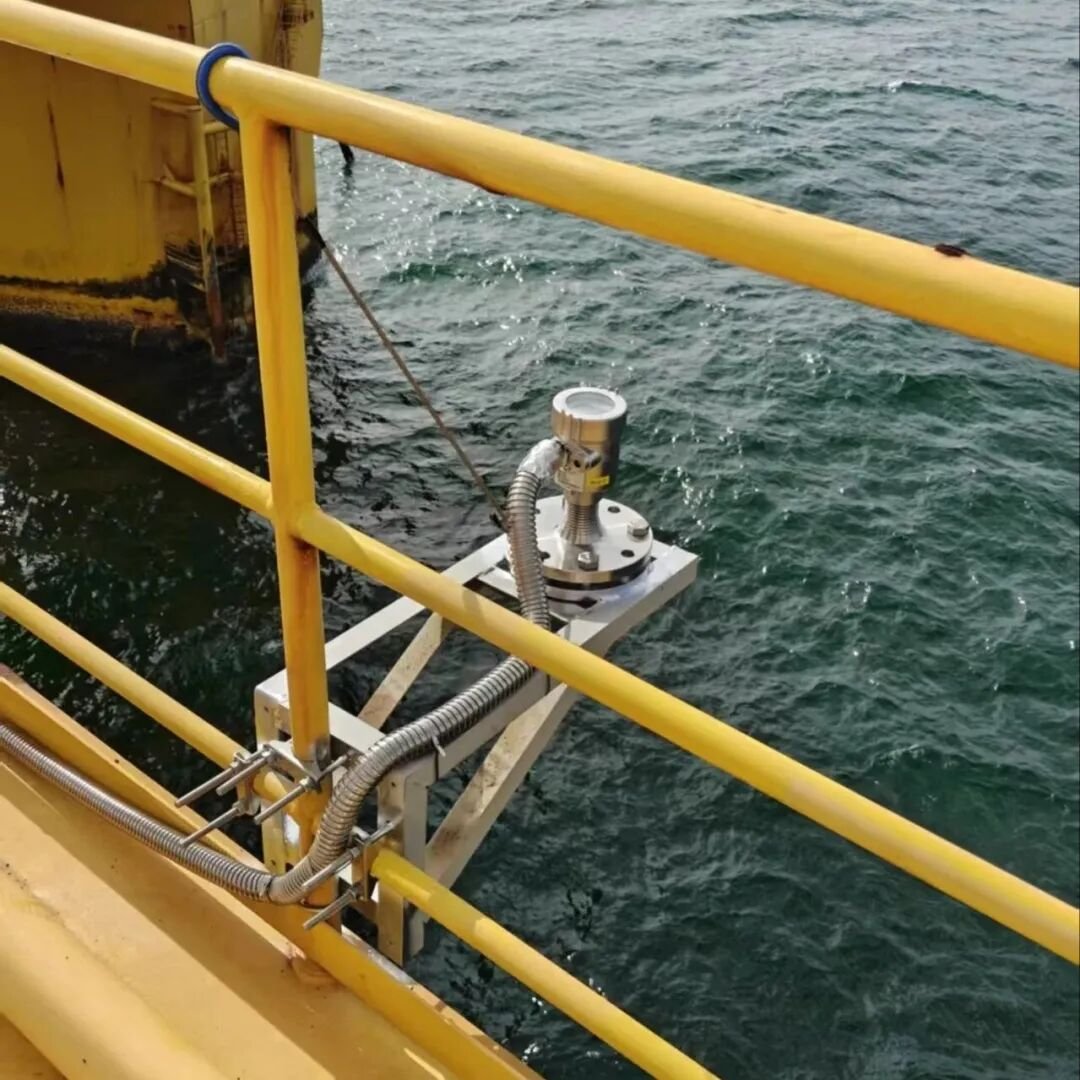
When you think of an offshore drilling platform, towering derricks and roaring cranes probably come to mind. But have you ever noticed that, tucked away on a corner of the platform’s subsea structure, a seemingly unassuming “stainless steel eye” — the all-stainless steel radar level sensor — keeps a 24/7 watch over sea surface dynamics, acting as a silent guardian of platform safety.
Why Choose a Radar Level Transmitter?
1. Non-contact Measurement for Superior Protection
Adopting a non-contact measurement method, the device avoids direct contact with seawater. This fundamentally eliminates damage to the measuring probe caused by seawater corrosion, wave impact, and marine biofouling, significantly extending the service life of the equipment.
2. Millimeter-level Measurement Accuracy for Reliable Data
Leveraging advanced high-precision radar technology, the device delivers stable millimeter level measurement accuracy. It can accurately capture subtle sea level changes induced by tidal fluctuations and storm surges, providing a solid foundation for data monitoring.
3. Exceptional Environmental Adaptability & Anti-interference Performance
Microwaves propagate at a constant speed in a vacuum, ensuring that measurement results are essentially unaffected by fluctuations in external environmental factors such as temperature, humidity, and air pressure. The device maintains stable data output even in complex marine environments.
4. Easy Installation & Maintenance for Lower Operational Costs
Equipped with standard fault alarm and self-diagnosis functions, the device will output specific error codes via the operation and display module when anomalies occur. Users can quickly identify and troubleshoot faults based on these codes, significantly reducing maintenance difficulty and operational costs.
Want to Know More About this Radar Level Meter or its Pricing?
Our engineers will recommend the most suitable model based on your specs and budget.
Key Considerations When Selecting a Radar Level Sensor for Sea Level Monitoring
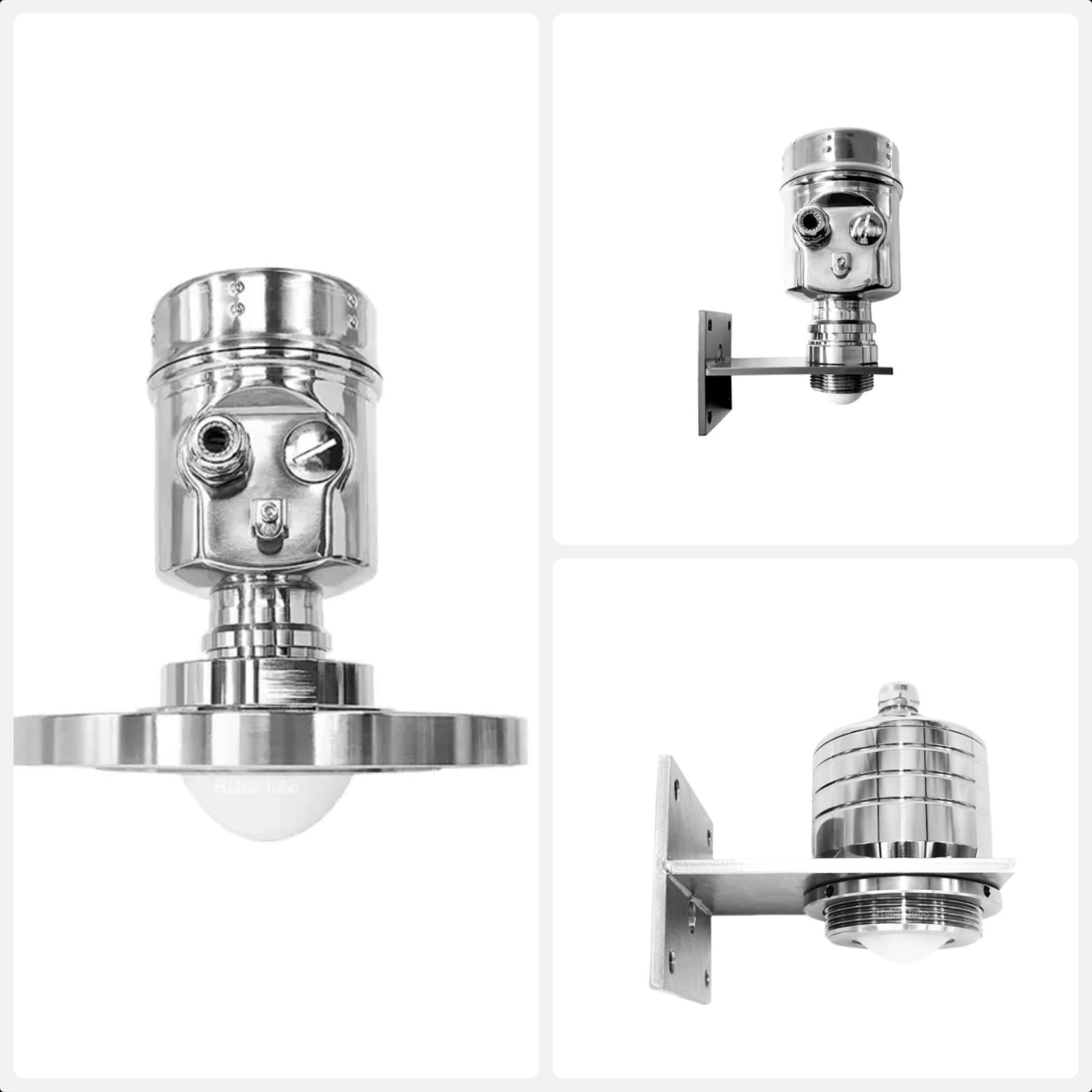
To ensure optimal performance, it’s important to choose the right radar level sensor for your sea level monitoring needs. Here are some critical factors to consider:
Material Selection: Opt for a radar level sensor with a full stainless steel enclosure (such as 316L stainless steel, duplex steel, or Hastelloy). These materials offer exceptional resistance to chloride corrosion (the main component of seawater) and salt spray erosion, ensuring durability in harsh marine environments.
Sealing & Protection Rating: Look for a sensor with a high IP rating (IP66 or higher) and advanced sealing technologies (such as laser welding or fluororubber seals). This prevents moisture, salt, and dust from entering the sensor, protecting internal electronic components and ensuring stable operation.
Measurement Range: Select a radar level sensor with a measurement range suitable for your monitoring scenario. For coastal areas with large tidal ranges or storm surges, choose a sensor with a wide range to capture extreme fluctuations.
Signal Stability: Ensure the sensor has strong anti-interference capabilities, especially if monitoring in areas with heavy maritime traffic or nearby industrial equipment. Look for sensors with advanced signal processing technology to filter out noise and ensure accurate data transmission.
QiYi radar level gauges excel in all the factors mentioned above, delivering outstanding accuracy, long-term stability, and reliable performance even in the most demanding marine environments.
Wondering Whether This Radar Level Transmitter is the Right Solution for your Application?
Our engineers will recommend the most suitable model based on your specs and budget.
Other Typical Application Scenarios
(1) Petroleum & Chemical Industry
- Crude Oil Storage Tanks: High temperature and corrosion resistance, suitable for media such as asphalt.
- Reactors: Stable measurement of highly corrosive liquids (e.g., sulfuric acid, lye) under high-pressure conditions.
(2) Food & Pharmaceutical Industry
- Hygienic Design: Equipped with PTFE antennas, suitable for food products such as milk and syrup.
- High-temperature Disinfection and Cleaning: Resistant to high-temperature steam sterilization.
(3) Power & Environmental Protection Industry
- Fly Ash Silos: Accurate measurement of solid and powder even in dusty environments.
- Wastewater Treatment: Acid and alkali resistance, ensuring trouble-free operation during long-term measurement.
The all-stainless steel 80 GHz radar level transmitter is an ideal and reliable solution for measuring sea level and water level on offshore drilling platforms. The key to successful application lies in selecting the appropriate instrument model, formulating a scientific installation plan, and implementing simple preventive maintenance. Before purchase, we recommend that you communicate in detail with our technical engineers and clarify your specific application conditions to obtain the most accurate product selection and configuration suggestions.