As industrial automation and precision process control continue to advance, radar level sensors have become indispensable equipment for continuous liquid and solid level measurement across chemical, water treatment, food and beverage, petrochemical, and bulk material industries. For decades, 26G radar level sensors have served as a mainstream industrial standard, valued for mature technology, stable basic performance, and cost accessibility. With the widespread commercialization of millimeter-wave technology, 80G radar level sensors have rapidly gained market popularity. This leads many plant operators and procurement teams to ask a critical question: Will 80G radar level sensors fully replace 26G radar level sensors?
The answer is no. While 80G radar level sensors present obvious technical advantages and are gradually becoming the preferred option for new industrial projects, a complete full replacement across all scenarios is unrealistic. Both types of radar level sensors have irreplaceable application boundaries based on physical characteristics and on-site working conditions. This article objectively compares their performance differences, analyzes applicable scenarios, and clarifies the real market iteration trend.
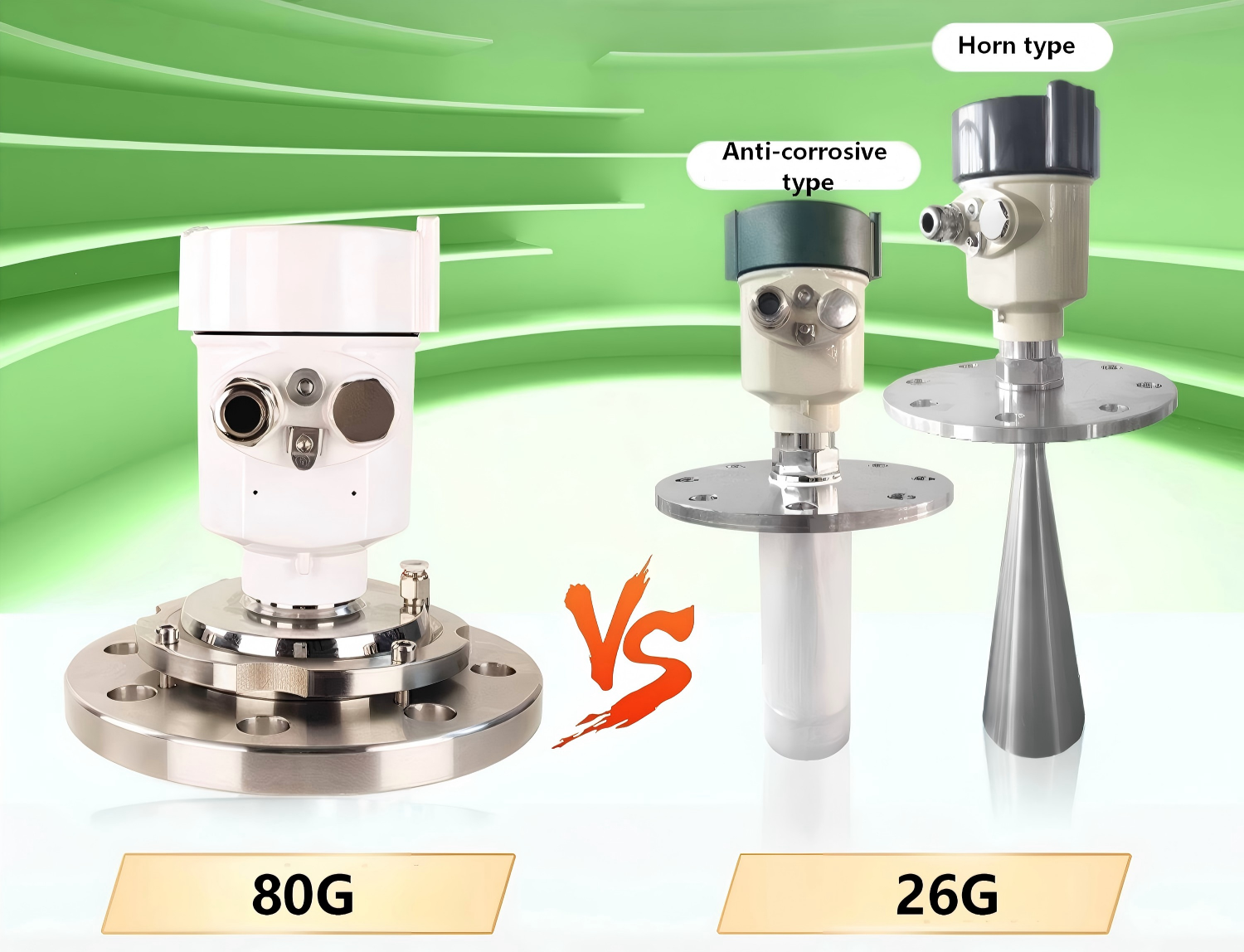
Core Technical Differences Between 26G and 80G Radar Level Sensors
1. Core Impacts of Frequency Band Differences
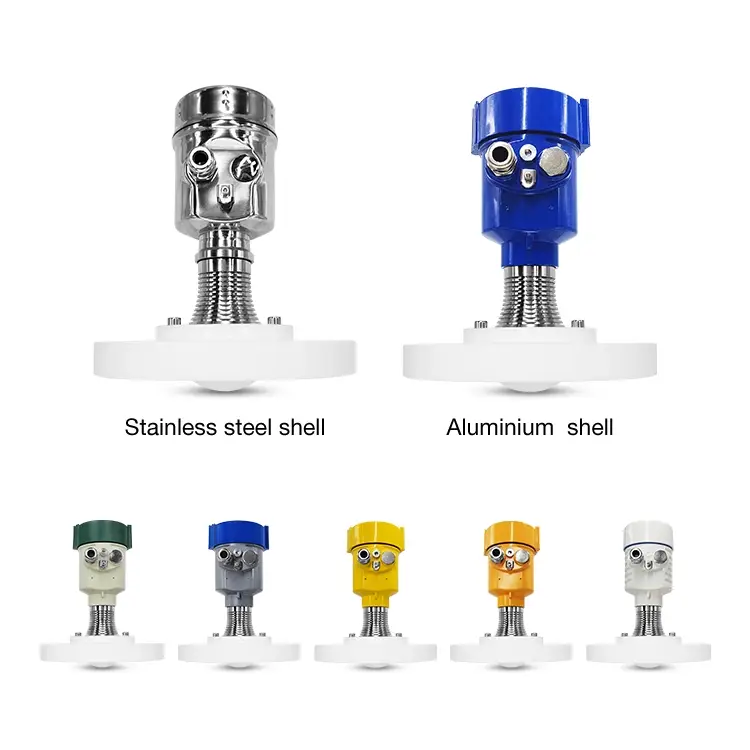
The operating frequency of radar level sensors directly determines their signal characteristics. 26G radar level sensors adopt the frequency band of 26.5–27.5 GHz, while 80G models operate within the range of 76–81 GHz. Such frequency band differences lead to a variety of performance discrepancies.
In terms of signal wavelength, the wavelength of 26G radar is about 11 mm, while that of 80G radar is shortened to 3.7 mm. The shorter the wavelength, the easier it is for the signal to be focused. 80G radar level sensors feature stronger capability to capture tiny liquid level changes, which is why they take advantages in high-precision measurement scenarios.
Thanks to its long wavelength characteristic, 26G radar maintains more stable signal penetration through interfering media such as dust and steam, delivering outstanding adaptability under complex working conditions.
2. Key Differences in Performance Parameters
2.1 Measurement Accuracy and Resolution
The measurement accuracy of 80G radar level sensors can typically reach ±1 mm,
with a resolution up to 0.1 mm,
far exceeding 26G radar level sensors that deliver an accuracy of ±5 mm and a resolution of 1 mm.
This performance gap is particularly critical in industries with strict liquid level control requirements such as fine chemical and pharmaceutical sectors. For instance, tiny liquid level errors during reagent preparation may affect the purity of finished products.
Want to Know More About this 80G Radar Level Transmitter or its Pricing?
Our engineers will recommend the most suitable model based on your specs and budget.
For large-span liquid level measurement in storage tanks (0–75 m), 26G radar level sensors can keep the error proportion within a reasonable range, fully meeting the metering demands of most industrial storage and warehousing scenarios.
2.2 Beam Angle and Installation Requirements
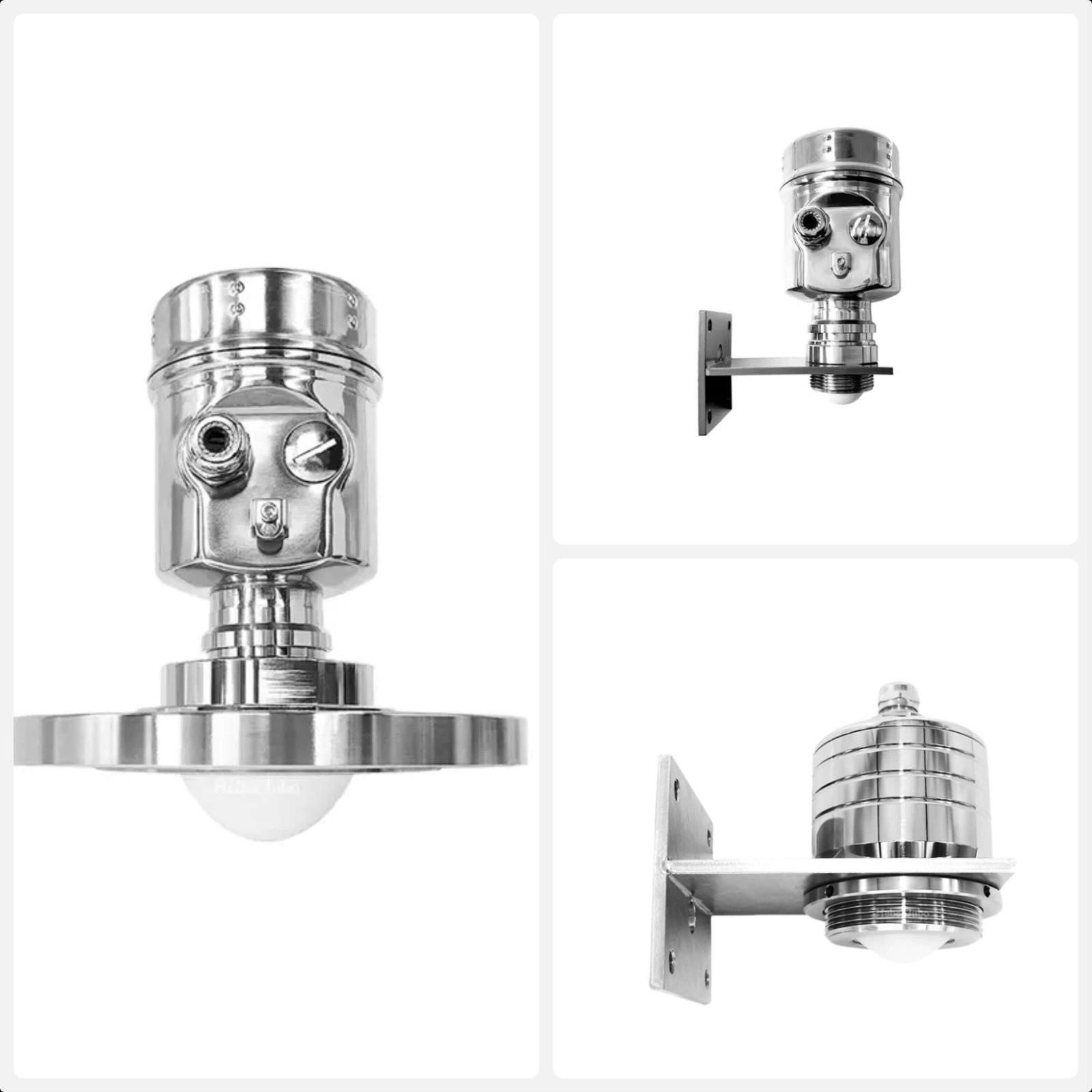
Beam angle is a vital parameter of radar level sensors, which directly affects installation space requirements.
The beam angle of 80G radar level sensors can be limited within 3°,
while that of 26G radar level sensors generally ranges from 8° to 12°.
A narrow beam enables 80G radar sensors to avoid internal obstacles such as tank agitators and heating pipes, achieving accurate measurement even in small-diameter storage tanks.
Due to its wider beam angle, 26G radar level sensors require a larger unobstructed area for installation; otherwise, they are susceptible to signal interference. Nevertheless, for large open tanks, the wide beam angle can reduce measurement deviation caused by liquid level fluctuation.
3. Accurate Matching of Application Scenarios
Advantages & Applicable Fields of 26G Radar Level Sensor
- High-dust environments: Cement silos, coal powder tanks, etc. Its long-wavelength signal features strong penetration and is barely attenuated by dust.
- Large tank storage: Large-capacity containers such as oil storage tanks and chemical raw material tanks. The wide beam adapts to large fluctuations of liquid level.
Core Application Scenarios of 80G Radar Level Sensor
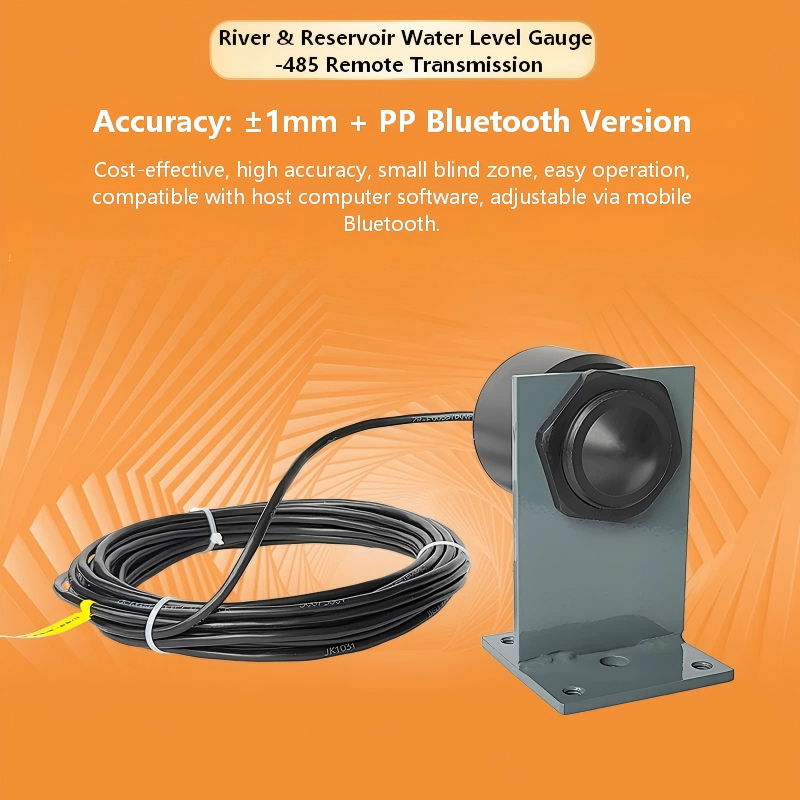
- Fine chemical industry: Reactors, small metering tanks and other equipment requiring high-precision level control.
- Complex working conditions: Scenarios with stirring, foam and steam; the narrow beam can effectively avoid interference.
- Limited installation space: Vertical storage tanks in food processing, small material tanks in pharmaceutical industry, etc.
- Higher cost performance: In 2026, the output of 80G radar level gauges has increased substantially, driving down overall costs. Its selling price is now on par with or even lower than traditional 26G models.
- Compact size and light weight: 80G radar level transmitters adopt a stainless-horn-free design, featuring smaller overall dimensions and lighter weight with outstanding size and weight advantages.
- A wider application range: The 80G radar level gauge can accurately measure the level of various media, suitable for liquids, solids, powders and slurries.
Wondering Whether This 80G Radar Level Transmitter is the Right Solution for your Application?
Our engineers will recommend the most suitable model based on your specs and budget.
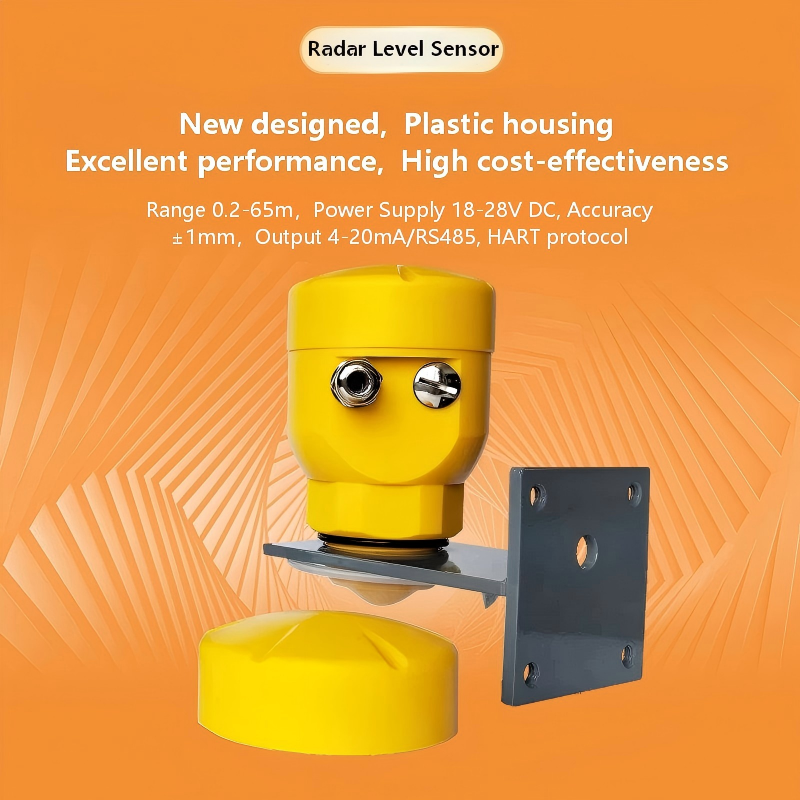
At present, 80G radar sensors have formed a complete product lineup, including mini type, waterproof type and other specifications, fully suitable for most working conditions and application scenarios.
It is evident that 26G radar level transmitters still retain their unique applicable working conditions and cost-performance advantages at this stage, and will not be completely replaced by 80G radar sensors in the short term.
With the continuous upgrading of radar technology, further cost reduction and enriched product models of 80G radars, their application scope will keep expanding. In the long run, 26G radar level transmitters will eventually be phased out and fade out of the industrial application market.