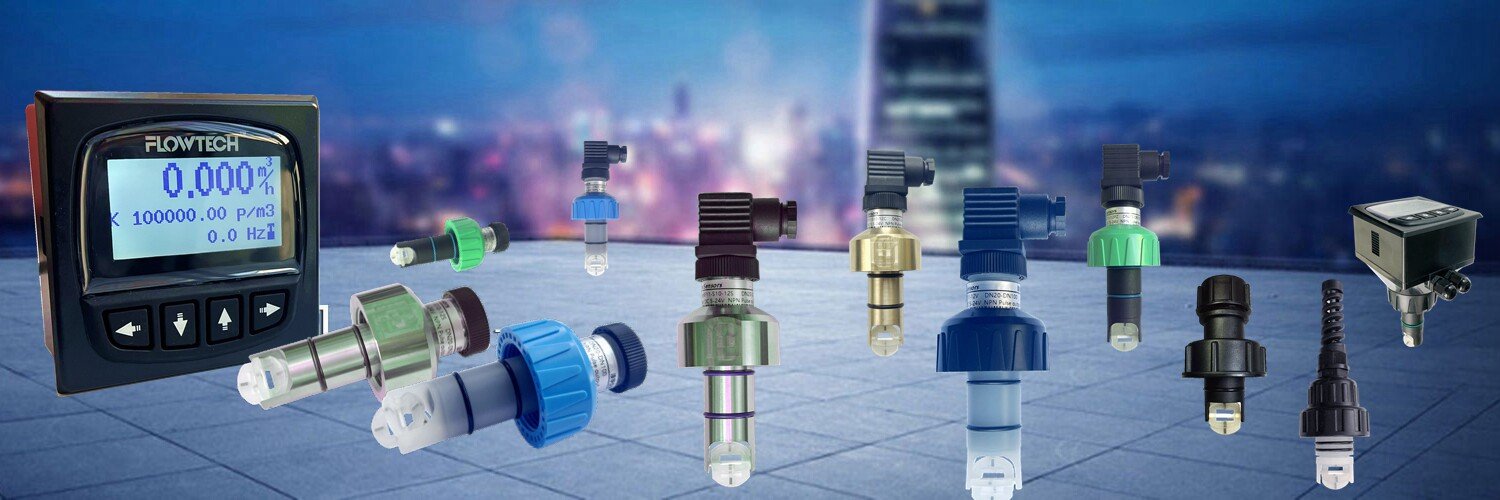
Precise fluid measurement forms the foundation of process optimization, waste reduction, and uninterrupted production. For industrial applications requiring high measuring accuracy, long-term operational reliability, and favorable overall cost performance, high-performance paddle wheel flow sensors are a proven, mature, and practical solution.
What is a Paddle Wheel Flow Sensor?
A paddle wheel flow sensor (commonly known as a rotary flow meter) is a velocity-based device designed to measure liquid flow rates accurately.
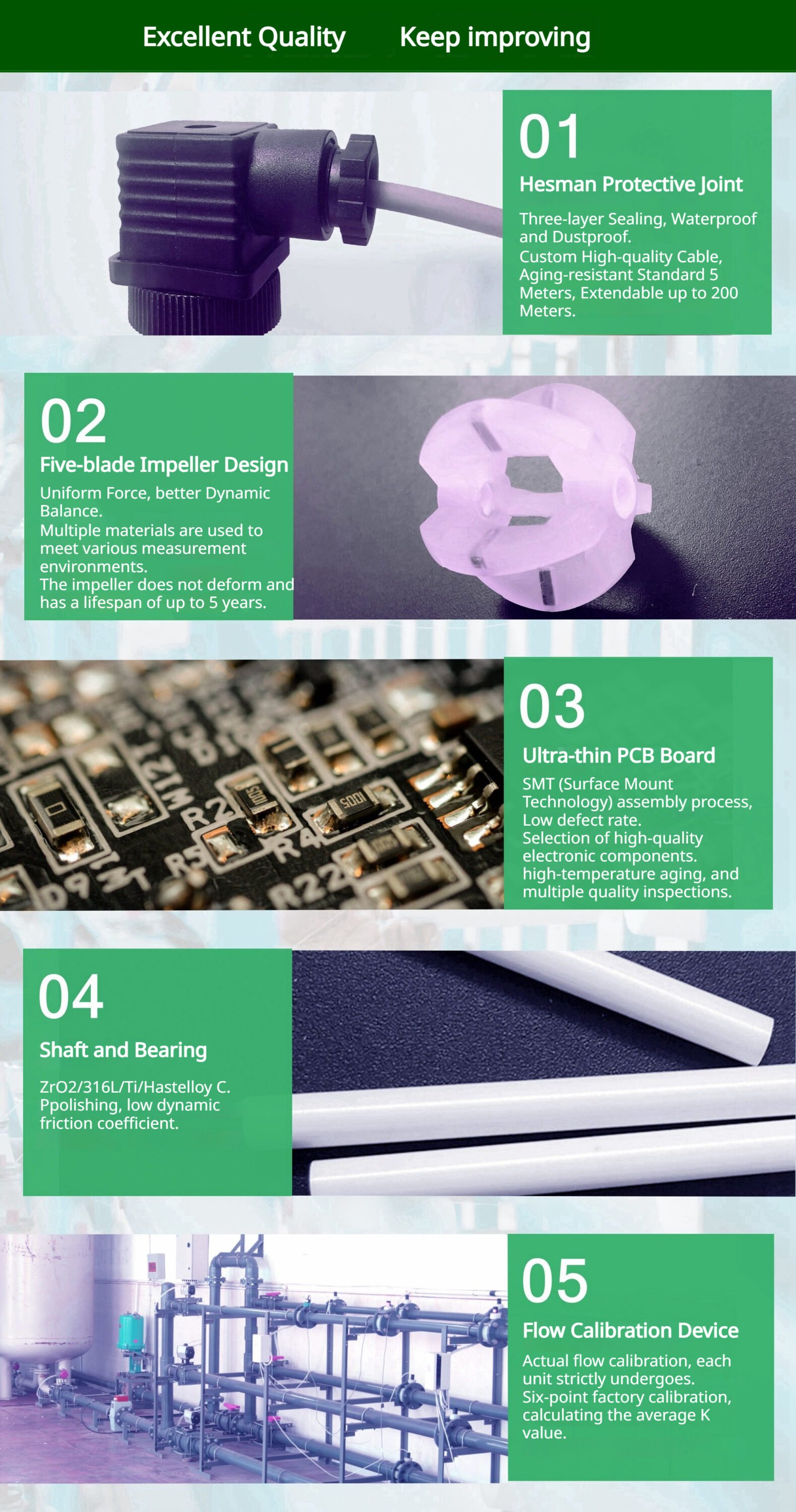
So what material are the paddle wheel flow sensor consist of? It features a simple yet robust construction, consisting mainly of a housing, a paddle wheel, bearings, and a signal acquisition module. Without intricate precision transmission components, it delivers low failure rates.
Liquid-wetted parts are commonly available in 304SS, 316L, PVDF, PP, and other materials, suitable for various working conditions including clean water, wastewater, and corrosive liquids.
These sensors feature a simple structure and low pressure drop. They deliver outstanding durability, high stability, and good accuracy up to ±1% in clean liquids or liquids with mild impurities, and are widely used in a variety of non-custody transfer industries.
The flow velocity measuring range is generally 0.3 ~ 6 m/s, covering a wide pipe size range from DN25 to DN600. It can flexibly adapt to diverse applications ranging from small branch pipelines to large main pipelines, and meets the application requirements of most industrial cooling water, circulating water, environmental protection projects, swimming pool monitoring systems, and other scenarios.
Paddlewheel Flow Sensor Working Principle
The rotary flow meter operates on the classic impeller velocity measurement principle. A precision impeller supported by corrosion-resistant bearings is fitted at the center of the sensor probe. After the probe is inserted into the measuring pipeline via a welded base, the flowing liquid inside the pipe vertically strikes the impeller blades and drives rotation. Integrated magnetic-sensitive components (such as Hall switches) detect periodic magnetic variations from the magnets mounted on the impeller, generating a pulse frequency signal proportional to the impeller rotational speed, i.e., the fluid velocity.
The built-in microprocessor captures the frequency signal. With preset parameters including pipe cross-sectional area, it converts the signal into standard flow velocity, instantaneous flow rate, and totalized flow via dedicated algorithms. This principle of converting mechanical motion into electrical signals ensures direct and reliable measurement.
Want to Know More About This Paddle Wheel Flow Sensor and its Pricing?
Our engineers will recommend the most suitable model based on your specs and budget.
What are the Paddle wheel flow sensor advantages and disadvantages?
Paddle wheel flow meters adopt advanced design techniques to meet stringent industrial standards. Selecting a suitable paddle wheel flow sensor guarantees long-term stable operation of equipment.
Core advantages are listed as follows:
- Reliable Measurement Stability: Delivers exceptional linearity and repeatability for critical flow monitoring tasks.
- Cost-Effective Design: Provides a budget-friendly alternative to magnetic or Coriolis meters without sacrificing core performance.
- Easy Installation & Maintenance: Features compact designs that allow for quick insertion-type or in-line mounting.
- Durable Materials: Built with chemical-resistant engineering plastics and stainless steel options to withstand harsh environments.
However, rotary flow meters are not yet widely adopted in the market, mainly due to the following limitations:
- Medium Limitations: Not applicable to high-viscosity liquids or slurries with abundant solid particles. Impurities tend to cause abrasion to the impeller and bearings.
- Accuracy Limitations: Although rotary flow meters deliver stable measurement, their overall accuracy is moderate, around ±1%. In addition, the measurement error rises significantly when the flow velocity falls below 0.3 m/s.
- Output Limitations: Conventional rotary flow meters only output NPN and PNP square-wave pulse signals, and cannot directly supply 4–20mA analog signals or RS485 communication signals. A secondary instrument or a local converter is required if such extended output modes are needed.
Paddlewheel Flow Sensor Application
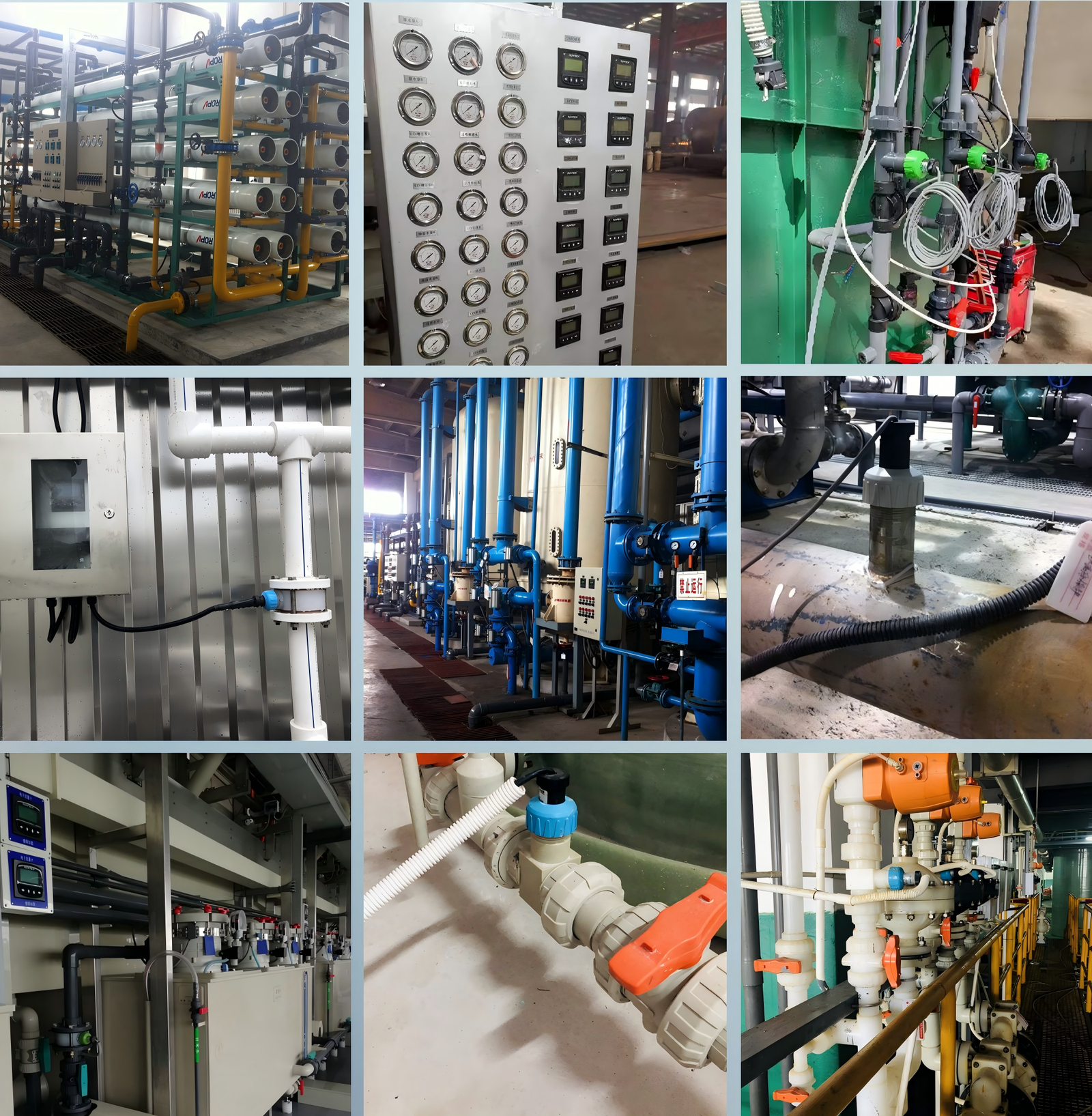
In industrial sites, they are installed on factory cooling water and process circulating water pipelines to track instantaneous and totalized flow data, supporting heat exchange management and energy consumption statistics.
For environmental protection industries, they work well for wastewater pipelines and reclaimed water systems as well as low-concentration acid-base wastewater monitoring. In civil sectors, they are adopted for circulating flow monitoring of swimming pool water treatment systems.
Benefiting from favorable cost performance and low pressure drop, this sensor is ideal for continuously running non-custody transfer applications. It provides stable flow data for system maintenance and water balance analysis. It is recommended for clean water, lightly contaminated liquids, and mildly corrosive media, while high-viscosity fluids and slurries with abundant solid particles are not applicable.
Paddle Wheel Flow Meter Installation
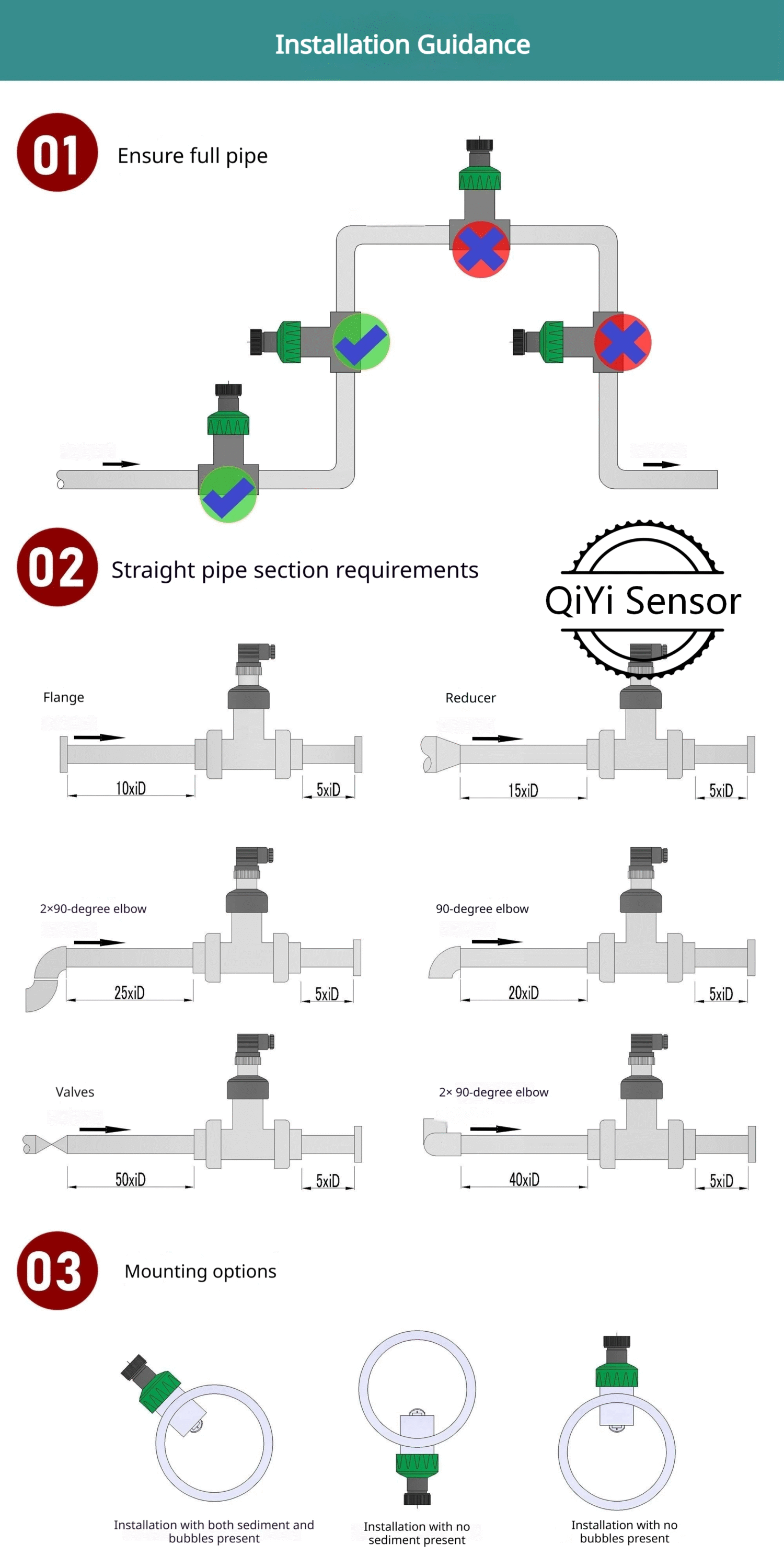
Comparison of Paddle Wheel Flow Meters and Turbine Flow Meters
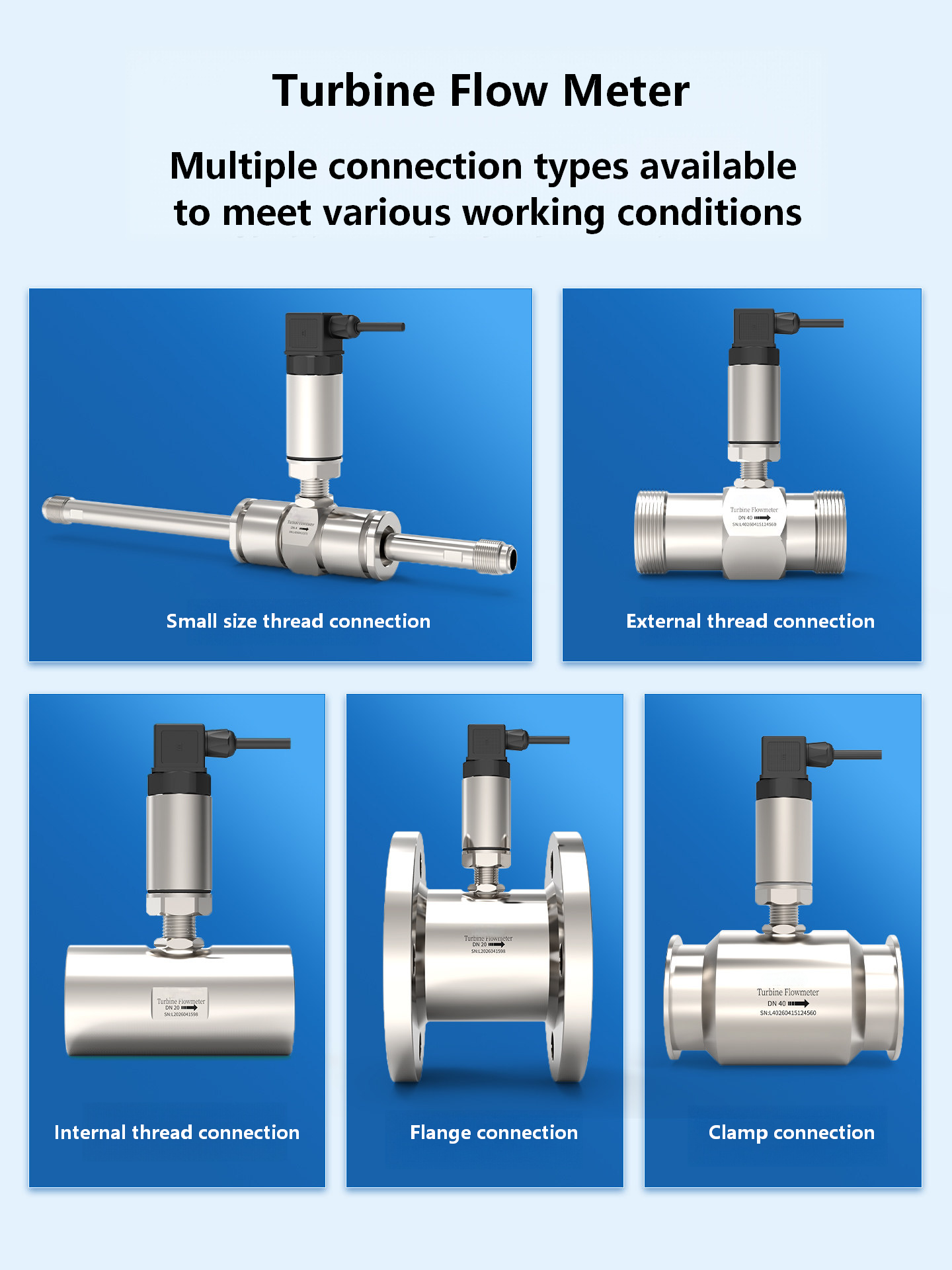
Both turbine flowmeters and rotary flow meters measure flow by means of impeller rotation. What are the core differences between them?
Turbine flowmeters feature fast response and excellent measurement accuracy. The typical accuracy is ±0.5% FS, with the best performance reaching ±0.25% FS. They maintain stable operation and capture dynamic flow changes in real time. Nevertheless, thanks to its sophisticated structure, it requires higher cleanliness of the measured medium. Solid impurities and particles in the fluid may damage the impeller, obstruct its rotation, lower measurement accuracy, and even cause instrument failure.
Rotary flow meters adopt a simpler structure with lower procurement cost and convenient installation and maintenance. Their measurement accuracy is lower compared with turbine flowmeters. However, they deliver outstanding stability and cost advantages for water treatment, environmental protection, and other applications requiring moderate measuring accuracy.
In conclusion, turbine flowmeters and rotary flow meters fit different application scenarios. With high accuracy and rapid response, turbine flowmeters are suitable for clean media under conditions with drastic flow fluctuations. Featuring simple construction, easy maintenance, and favorable cost performance, rotary flow meters are widely deployed for process monitoring requiring moderate accuracy and large-scale multi-point measurement.
In any case, both are reliable flow measurement instruments. You may select the appropriate model according to your on-site working conditions.
Click the picture to purchase via our online store; if you can’t open the store, contact us directly at doris@qiyisensor.com.
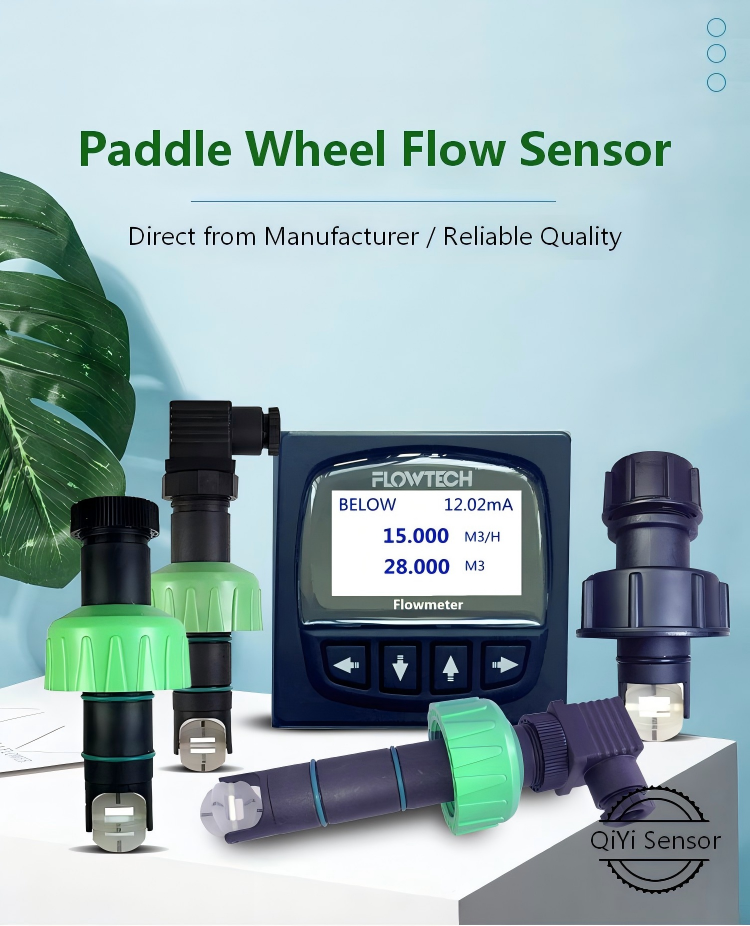
In conclusion, with a simple and reliable measuring principle, flexible installation options and practical expandable functions, rotary flow meters occupy a unique position for flow monitoring of low-viscosity liquids. Though not the highest-precision instrument, it is often among the most cost-effective and dependable solutions. For industrial enterprises committed to improving process visibility and optimizing energy consumption, a full understanding and proper application of rotary flow meters can provide an economical and robust monitoring tool for fluid measurement and control systems.


