The development of the radar open channel flow meter addresses the drawbacks of poor reliability and maintainability in traditional contact-based flow measurement under complex, harsh operating conditions. Using a non-contact measurement approach, these devices deliver high-precision, long-term stable online monitoring of water level and flow velocity across rivers, channels, culverts, and large-diameter pipelines, meeting the demands of smart water management and digital operations.
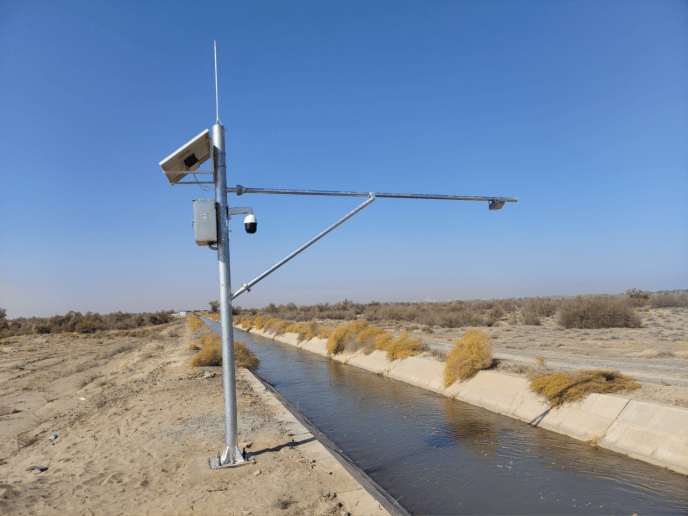
River Flow Monitoring System
A radar flow meter-based river flow monitoring system comprises three components:
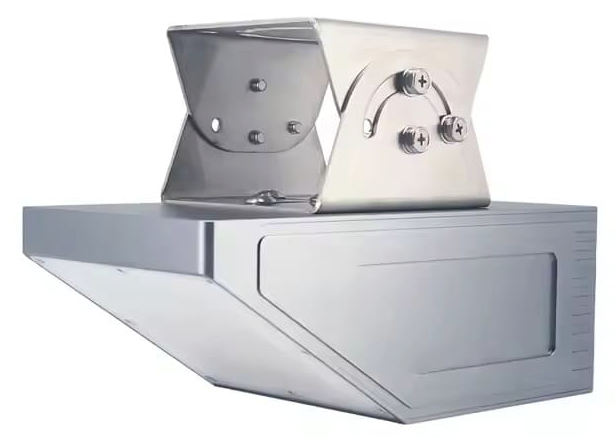
Radar Flow Meter: the system’s core component. It measures water surface flow rate via sensor-emitted and received radar waves. Mountable on riverbanks, bridges, etc., it enables non-contact measurement, eliminating water contact.
Data Acquisition & Transmission Equipment: collects data from the radar flowmeter sensor and transmits it to the remote monitoring center via wired or wireless means, ensuring real-time, accurate data transfer. These devices are typically installed in an on-site control cabinet.
Remote Monitoring Platform: includes computer software and mobile apps. It receives, displays, and analyzes monitoring data, allowing users to track real-time river flow dynamics for timely decision-making.
What is a Radar Wave Open Channel Flow Meter?
The radar sensor is mounted at a fixed position above the water surface, emitting microwave
signals and then receiving the reflected signals. By analyzing the differences between the transmitted and reflected signals, such as Doppler shift, the system can calculate the velocity of the water surface movement and then estimate the flow rate based on the surface velocity and the cross-sectional area of the water body.
It uses radar waves to measure water surface velocity and water level non-contactly, and automatically calculates flow rate using the velocity-area method. It does not require immersion in water and is unaffected by water quality or floating debris, making it suitable for various open-channel scenarios, such as rivers, irrigation canals, and culverts.
Features of an Open Channel Water Flow Meter
1. Efficient & Practical Operation
Enables continuous observation of water flow changes to support timely response to natural disasters and improved water resource utilization efficiency.
2. Non-contact, Easy Installation
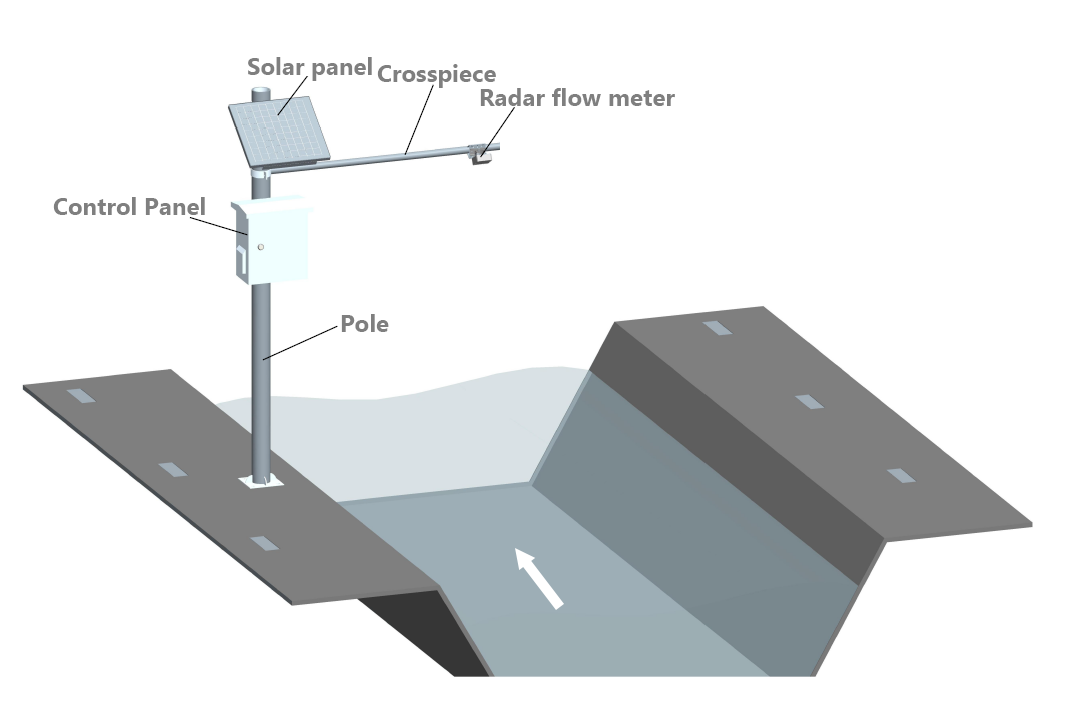
No direct contact with water required; installable via poles or bridges without underwater operations, feasible in both flood and dry seasons, simplifying installation and maintenance while minimizing flow disturbance.
3. Reliable, Continuous Monitoring
Delivers high-accuracy flow data with negligible fluid interference; equipped with low-power radar flow meters and level gauges (solar/lithium battery-powered) for all-weather, real-time online monitoring of water flow dynamics.
4. Versatile Application Scope
Suitable for diverse scenarios, including flood warning, water resource management, hydropower generation, and environmental monitoring.
Want to Know More About this Radar Flow Meter or its Pricing?
Our engineers will recommend the most suitable model based on your specs and budget.
Installation for a Non-contact Open Channel Flow Meter
Accurate monitoring of irrigation canal flow is of great significance. During flood control and disaster reduction, it serves as an “early warning system,” with precise flow measurement during the flood season, preventing dike breaches or resource waste. In water resource management, it acts as a “regulator,” preventing agricultural waste and ensuring rational water use. In ecological protection, it acts as a “guardian,” stabilizing downstream water levels and protecting habitats. Therefore, strengthening hydrological flow monitoring is particularly urgent. This can be achieved by installing advanced flow monitoring equipment and technologies to enable real-time and accurate monitoring of hydrological flow in this region.
Therefore, professional installation plays a crucial role in ensuring accurate flow measurement.
The selection of the measurement environment is directly related to the accuracy of flow measurement. To achieve good measurement results, the measurement canal section and installation conditions should meet the following requirements as much as possible:
- The measurement canal section should be straight, stable, and with concentrated water flow; there shall be no large rocks blocking water flow, no large eddies, turbulent flow, or similar phenomena.
- The installation point of the vertical pole or bracket must be hardened to ensure the firmness of the support rod.
- The sensor shall not be installed at an incline, and there shall be no obstacles or debris between the sensor and the water surface—this ensures the sensor can stably receive the reflected signal from the water surface.
- The water flow in the measurement canal section shall be kept smooth to prevent the accumulation of floating objects, branches, or weeds.
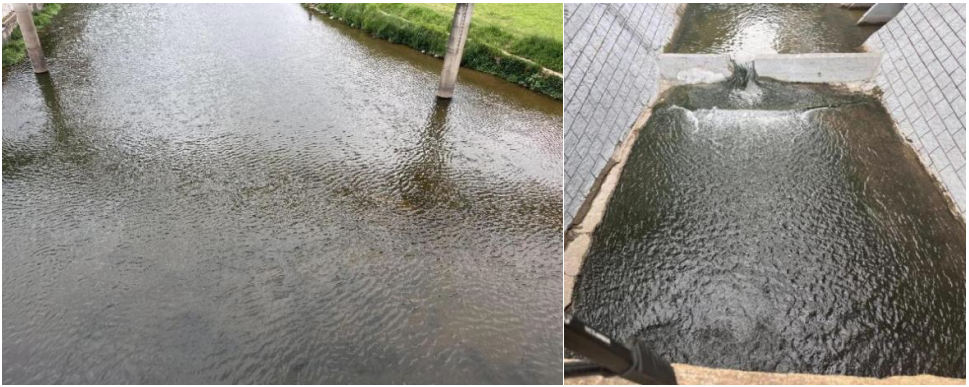
As shown in the figure below, when the water surface is in a static state, the reflected energy is weak, which may lead to inaccurate measurement results or even failure to measure. Conversely, when there are disordered ripples on the water surface, or the ripples are not obvious, or the location of the water outlet, the stability of the data will be affected, which in turn causes significant differences in the measured water flow values.
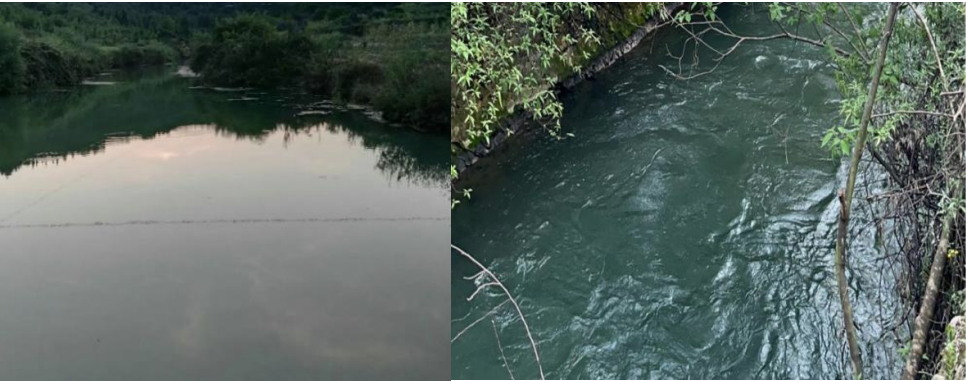
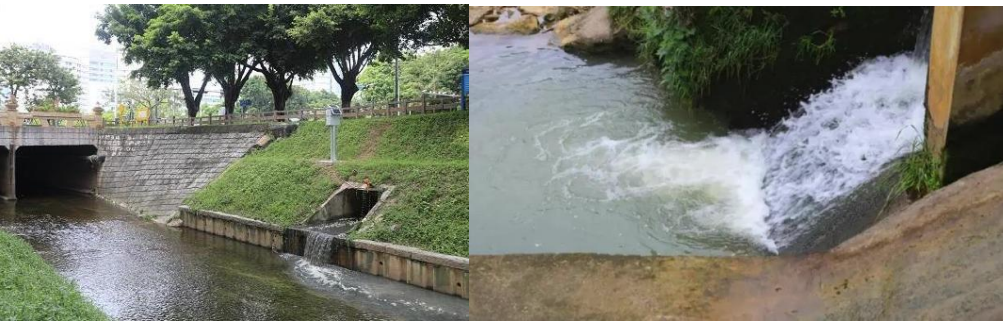
The water surface flow pattern with fish-scale-like ripples exhibits excellent reflected signal characteristics. It can reflect signals effectively and serves as a suitable measurement point.
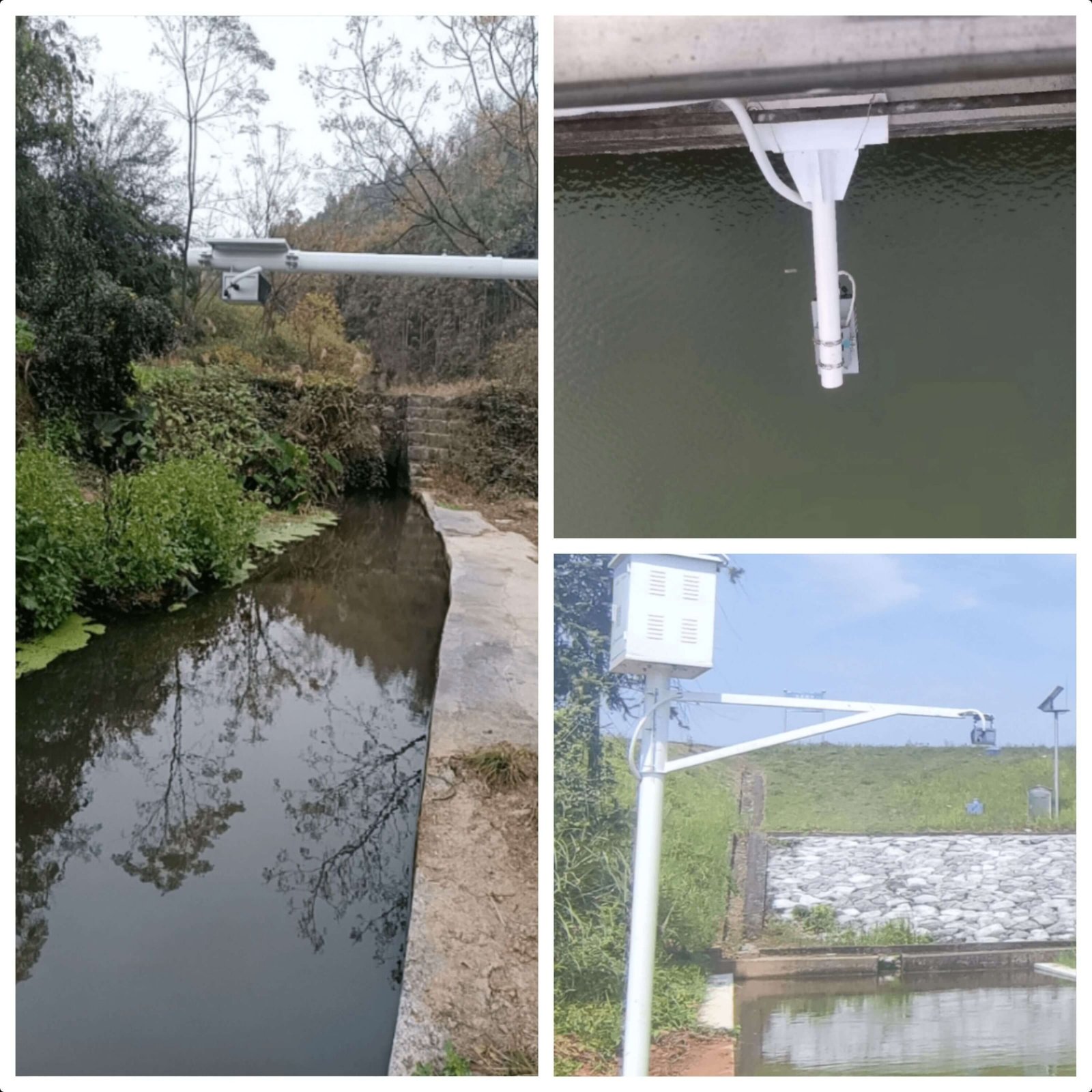
Examples of open channel flow meter installations
Limitations of Radar Flowmeters
As a high-performance device for open channel flow measurement, radar flowmeters have played an important role in various water resource monitoring projects by virtue of their outstanding advantages of high stability and low maintenance requirements. However, in practical applications, such devices still have the following limitations:
1. Restricted by Water and Surface Conditions
Surface foam, floating debris, or high-concentration sediment can directly interfere with radar signal transmission. For low-velocity water bodies with a flow speed of less than 0.1m/s or still water areas without ripples, the device’s sensitivity decreases significantly, making it prone to data drift and large measurement errors, which makes it difficult to meet the needs of high-precision monitoring.
2. Stringent Requirements for Installation Environment
The installation height and angle of the probe must be strictly and accurately calibrated. Any inclination deviation during installation, or the presence of obstacles and strong electromagnetic interference sources in the surrounding area, will damage signal stability and thus lead to data errors.
3. High Difficulty in Measuring Complex Cross-sections
The single-point measurement mode cannot accurately reflect the actual flow velocity distribution in irregular river channels. Shortcomings have to be compensated by means of multi-point deployment or cross-section calibration, which will correspondingly increase the project procurement cost and on-site operation difficulty.
4. Poor Adaptability to Extreme Weather
Heavy rain, dense fog, heavy snow, and other weather conditions will cause radar wave signal attenuation. In frigid environments, frost formation and icing on the probe will directly block signal transmission, requiring additional protective devices such as thermal insulation and deicing equipment.
Wondering Whether This Radar Open-channel Flow Meter is the Right Solution for your Application?
Our engineers will recommend the most suitable model based on your specs and budget.
The Working Principle of the Radar Flow Meter
Radar flow meters determine flow velocity using the microwave Doppler effect. The operating principle is as follows:
- Signal Transmission and Reception
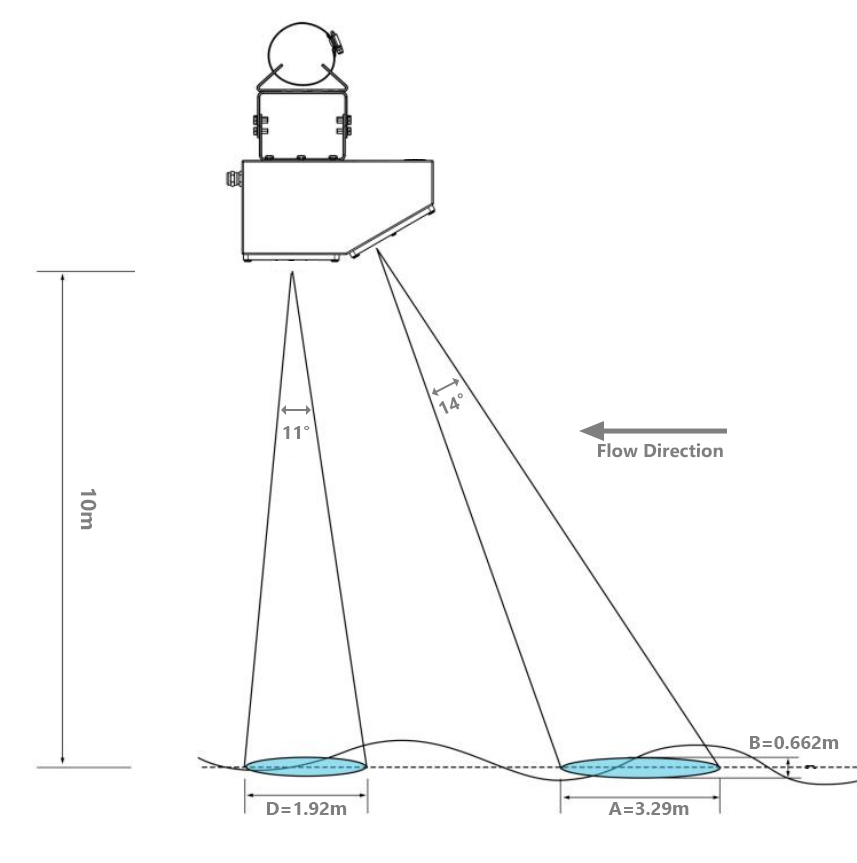
A high-frequency radar antenna emits microwave signals toward the water surface. The reflected signals are then captured by the receiver.
- Distance and Level Measurement
The time delay between transmitted and reflected signals is analyzed to calculate the distance to the liquid surface and determine the water level.
- Doppler Shift Analysis
The frequency shift between the transmitted and reflected signals is processed to accurately compute the surface flow velocity.
- Flow Rate Calculation
By integrating the measured velocity with preset channel cross-sectional parameters, such as channel width and slope, an embedded algorithm calculates the real-time volumetric flow rate.
Types of Open Channel Flow Meters
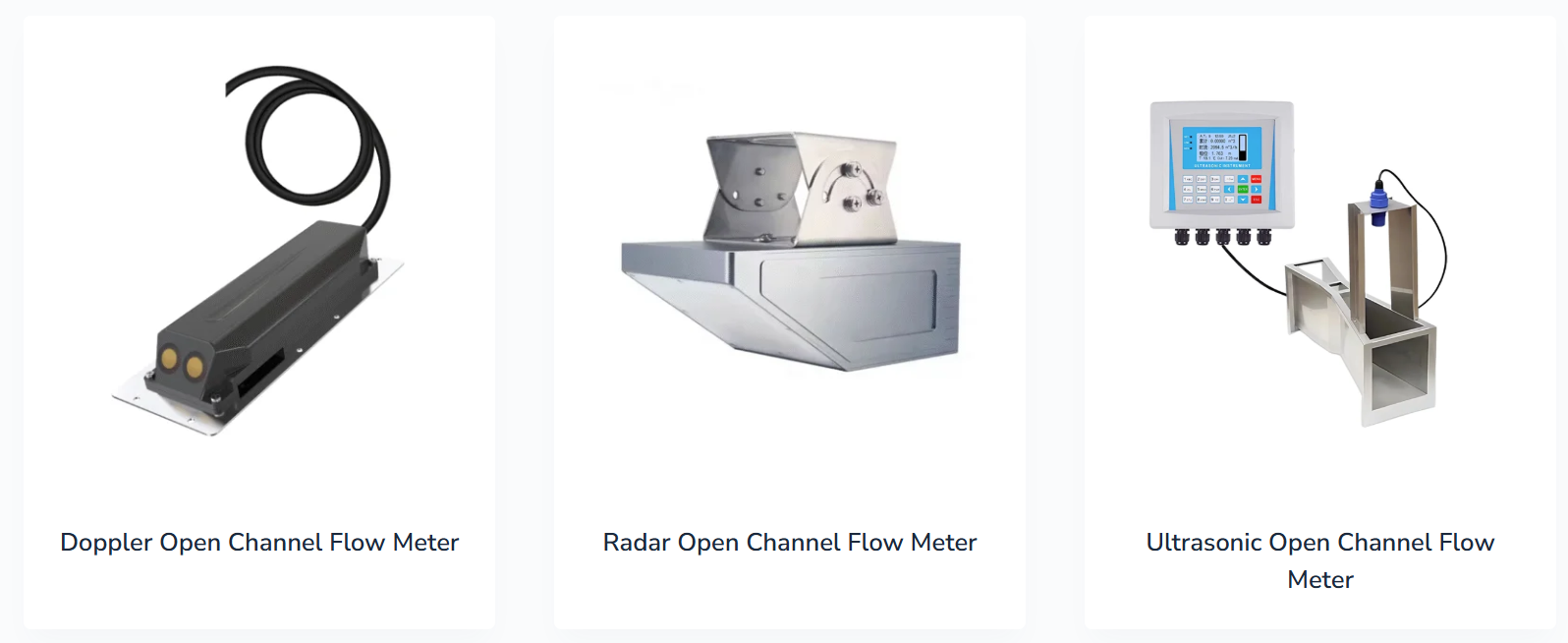
There are several types of open channel flow meters available, each suited to different applications.
In conclusion, radar open-channel flowmeters stand as a reliable, low-maintenance solution for modern water resource monitoring, effectively overcoming the limitations of traditional contact-based measurement technologies in harsh and complex conditions. From real-time river flow tracking to irrigation management and flood warning, their non-contact design, all-weather capability, and high-precision performance make them an indispensable tool for smart water management and digital operations.
While it is important to acknowledge their constraints, these can be effectively mitigated with proper site selection, professional installation, and targeted calibration. Whether you are optimizing water resource allocation, enhancing flood control systems, or conducting environmental monitoring, selecting the right radar flowmeter model tailored to your specific application needs is key to maximizing measurement efficiency and data reliability.
Ready to elevate your flow monitoring system? Talk to our engineers today to get a customized solution that aligns with your technical specs and budget, and unlock the full potential of intelligent hydrological monitoring for your projects.