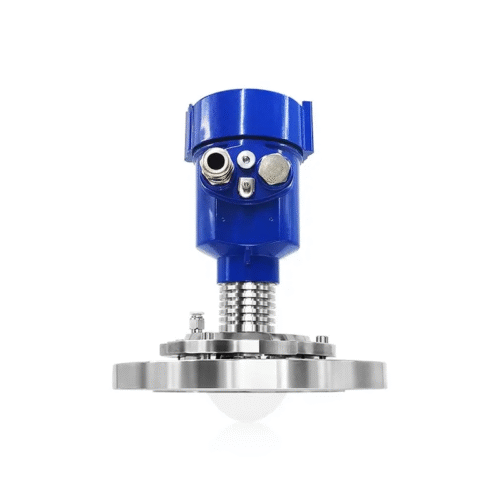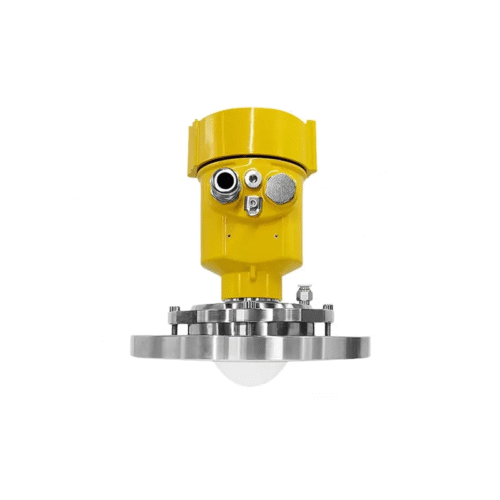
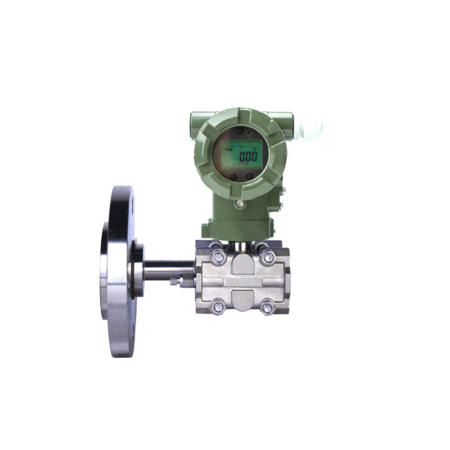
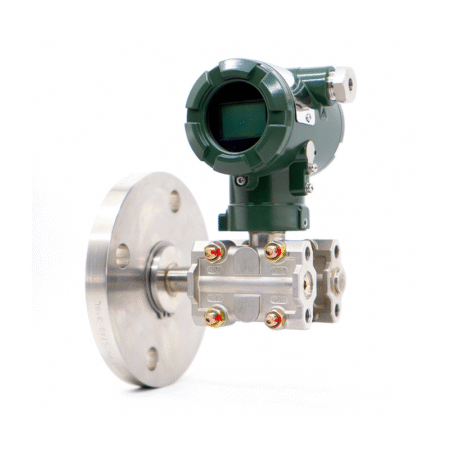
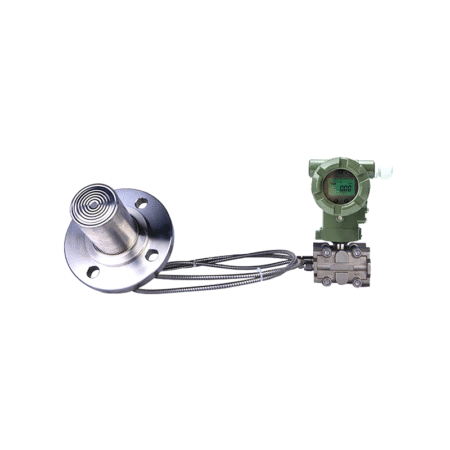
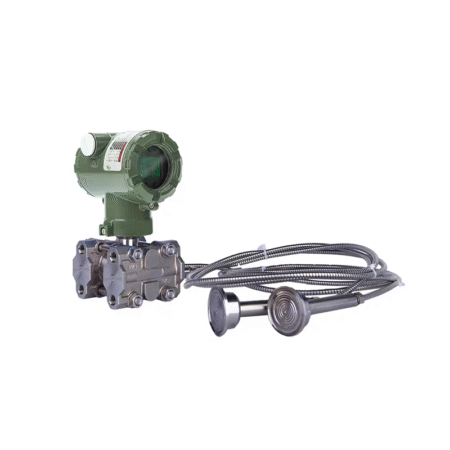
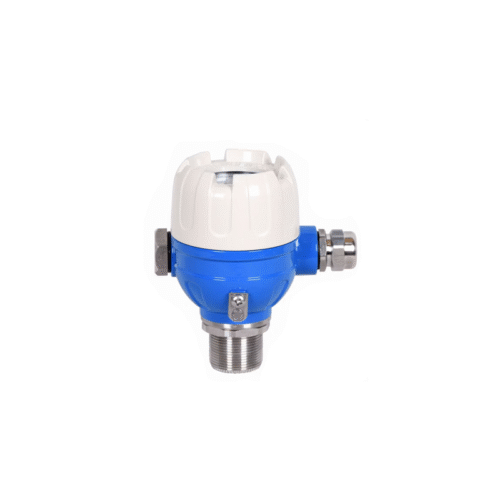
Differential Pressure Level Transmitter

Single/double flange liquid level transmitters are simple in structure, easy to install, and extremely reliable; they are widely used and suitable for high temperature, strong corrosion, and other media.

  • Model: QYL-3351LT
  • MOQ: 1PCS
  • Payment: Bank transfer/ Wire transfer
  • Lead Time: 5-7 days
  • OEM/ODM: Available

The QYL-3351LT differential pressure level transmitter is a state-of-the-art device developed with advanced international technology and high-quality imported components. Rigorously assembled and tested, this flange-type transmitter features a modern design, a wide range of specifications, and easy installation and operation.


Principle

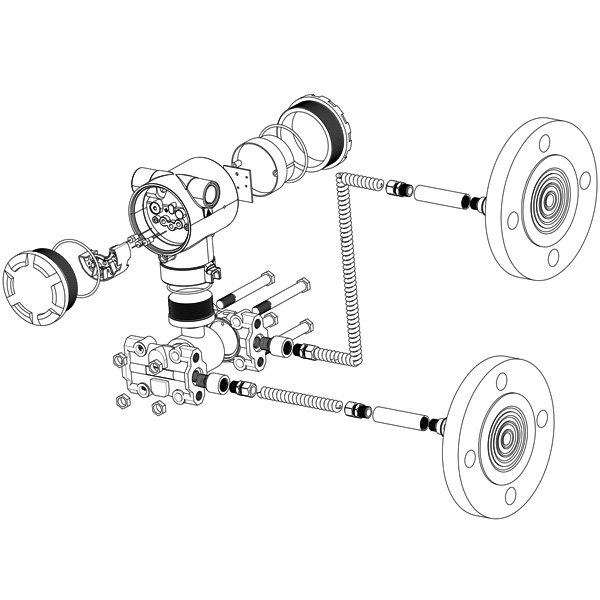
Single and double-flange differential pressure level gauges consist of a differential pressure transmitter, a capillary tube, and a flange with a sealing diaphragm. The role of the sealing diaphragm is to prevent the medium in the pipeline from directly entering the differential pressure transmitter. It is connected to the transmitter by a capillary tube filled with liquid (generally, silicone oil is used).

When the diaphragm is pressed, it will cause slight deformation, and the deformation displacement or frequency is transmitted to the transmitter through the liquid in the capillary tube, which is processed by the transmitter and converted into an output signal. The two pressures of the medium to be measured pass into the high and low pressure chambers, act on the isolation diaphragms on both sides of the delta element (i.e., the sensitive element), and are transferred to both sides of the measuring diaphragm through the isolation diaphragms and the filling liquid in the element.

The measuring diaphragm and the electrodes on both sides form a capacitor. When the pressures on both sides are inconsistent, the measuring diaphragm is displaced, and the displacement is proportional to the pressure difference. Therefore, the capacitances on both sides are unequal and are converted into signals proportional to the pressure through the oscillation and demodulation links.
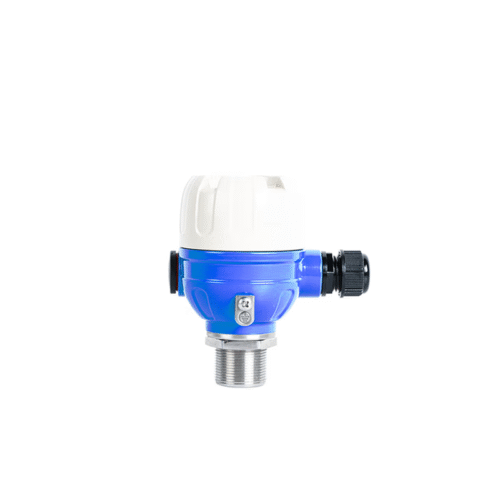
 

  • 0.075% high accuracy;
  • The range and zero point are externally continuously adjustable.
  • Adjustable damping and high pressure resistance;
  • No mechanical moving parts, good stability,
  • Automatic fault diagnosis and less maintenance;
  • Various diaphragm materials that contact the medium are available.
  • Two-wire system 4-20mA, complies with NAMIR NE43 specification, superimposed digital signals (Hart protocol).
Performance Parameters
Measuring medium Gas, vapour, liquid
Accuracy ±0.075%, ±0.1%, ±0.2% (including linearity, return and repeatability from zero)
Stability ±0.2%/years
Power supply 10 to 36V DC (24V DC recommended)
Reference accuracy of the adjustable range If TD>10 (TD= Maximum range / Adjustable range ) ±(0.075×TD)%
Ambient temperature -40℃ ~85
Measuring medium temperature -40℃~400℃
Storage temperature -40°C ~85°C
Display LCD, OLED
Display module temperature -20℃ ~ 70℃ (LCD), -40℃ ~ 80℃ (OLED)
physical parameter
Measuring diaphragms 316L, Hastelloy C, tantalum, titanium, nickel, Monel, dual phase steel, PFA, gold plating
Process connections Stainless steel 304, 316L
Filling fluid Silicone oil, fluorine oil, etc.
Transmitter housing Aluminium alloy, epoxy resin sprayed on the outside.
Housing sealing ring Nitrile rubber
Nameplate Stainless steel 304
Shell protection grade IP67
Explosion-proof grade Exd Ⅱ CT6 Gb, Exia Ⅱ CT6 Ga

If the tank/container is open or under normal pressure, the liquid to be measured is not dirty, sticky, will not block the pipe, and is not afraid of volatilization into the air, just a single flange will be ok.​​

As long as the tank/container is under pressure, or the liquid is sticky, easy to solidify and crystallize, toxic and harmful, high temperature, and volatile, then double flanges are the only choice, which has high accuracy and safety.​​

When selecting, you must comprehensively consider specific process conditions (pressure, temperature, medium characteristics, safety requirements, accuracy requirements, installation space, maintenance convenience, cost).