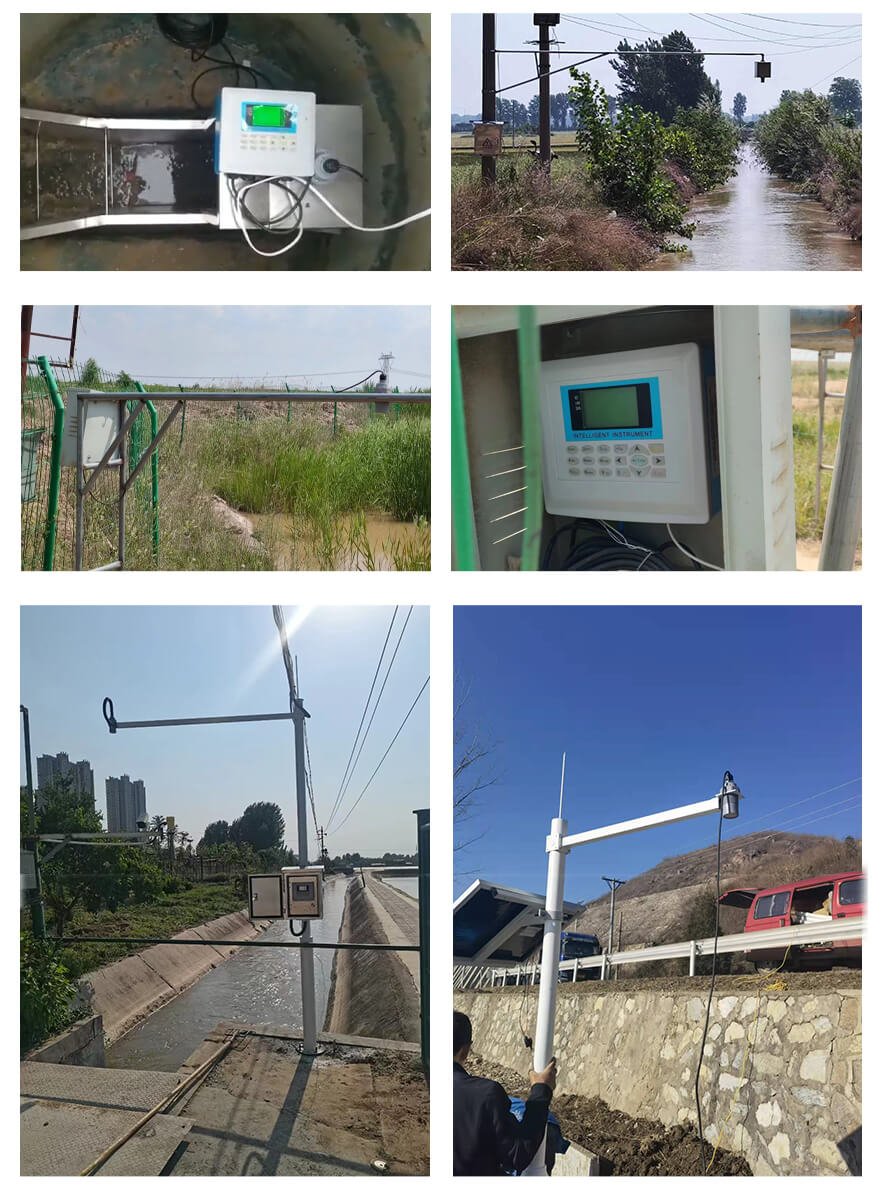
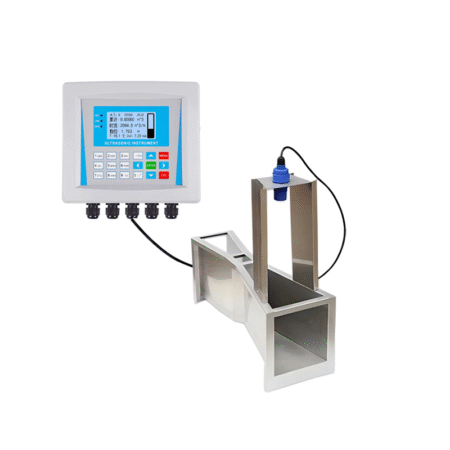
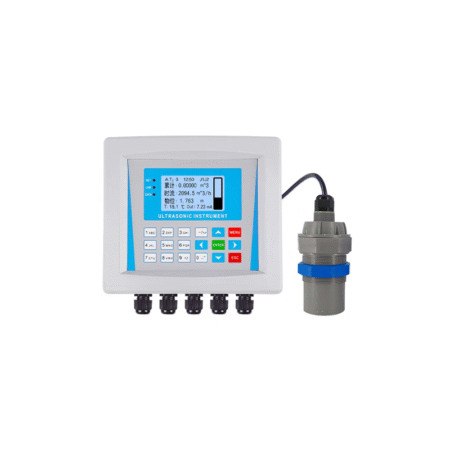
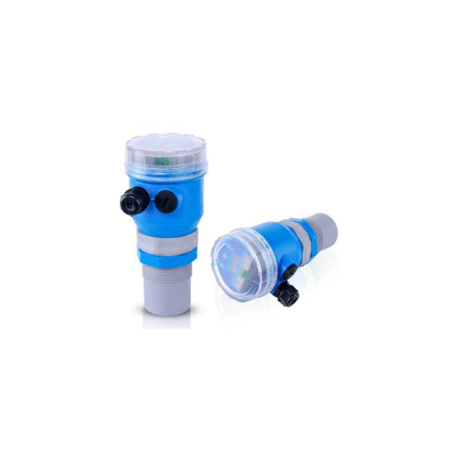
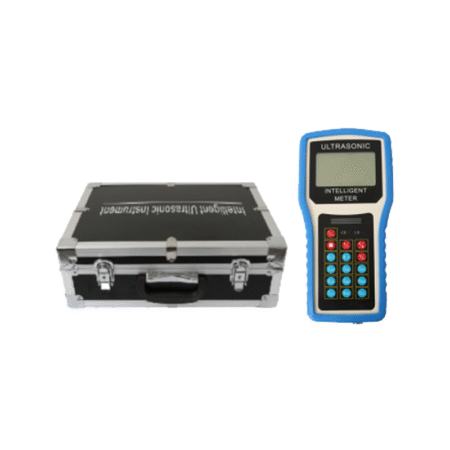
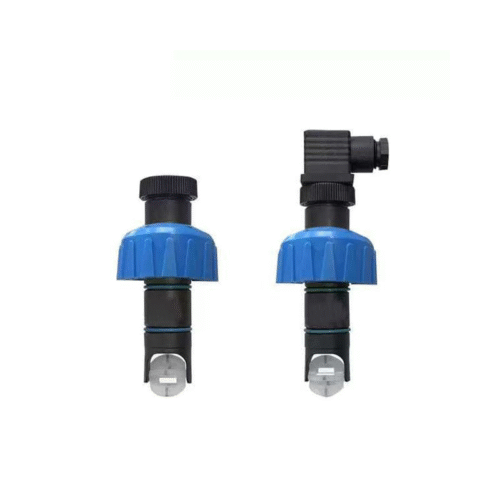
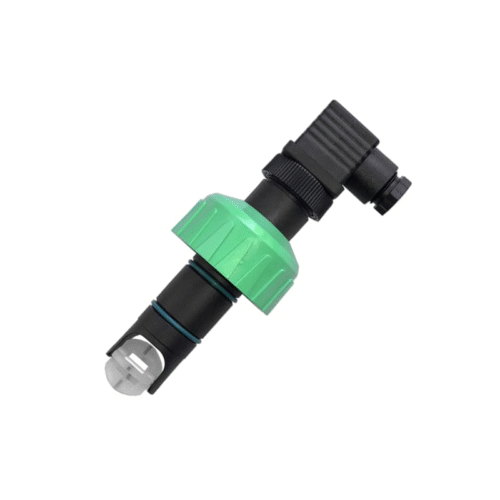
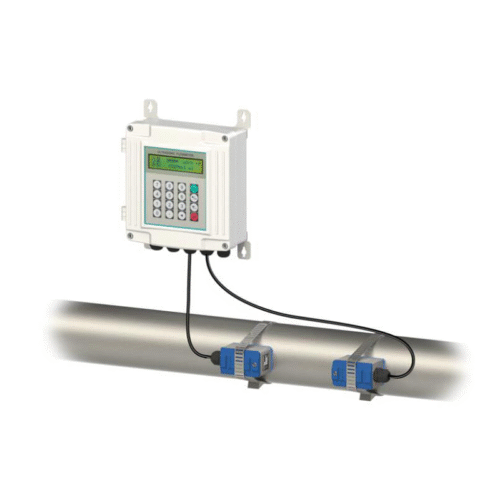
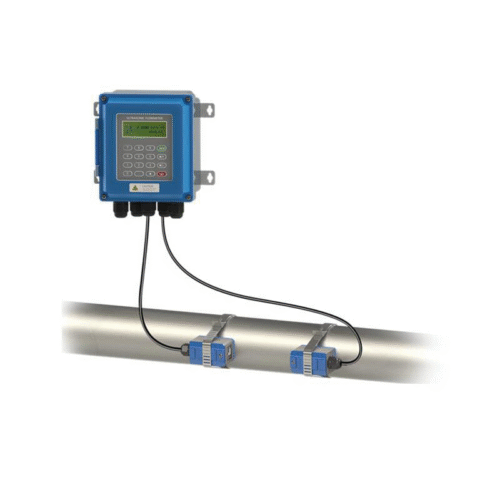
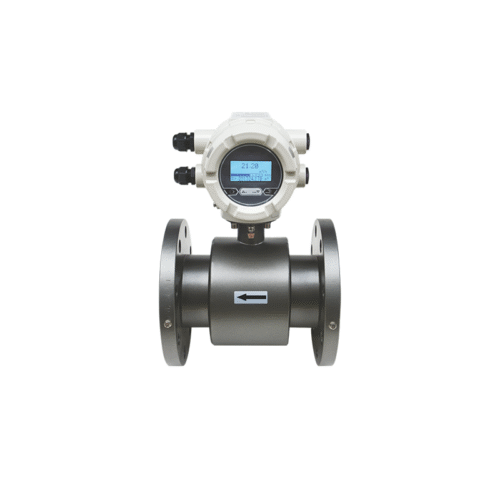
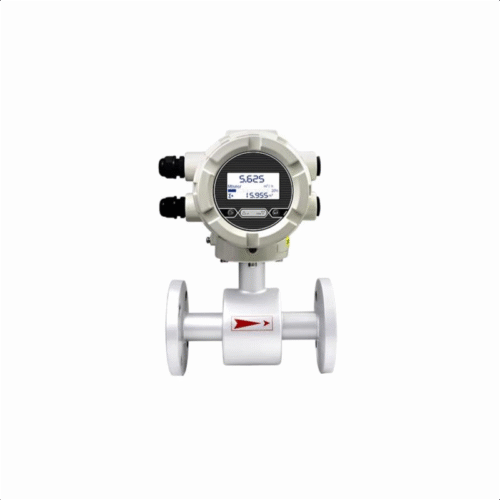
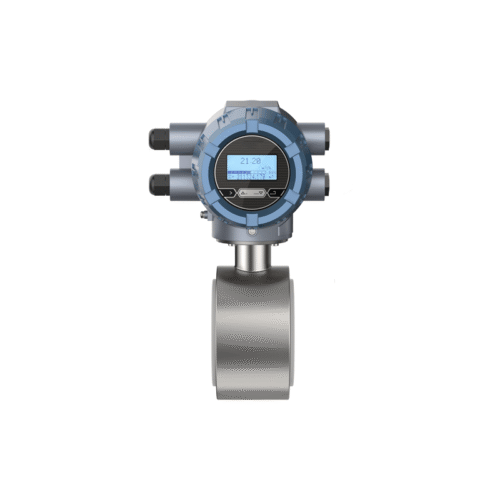
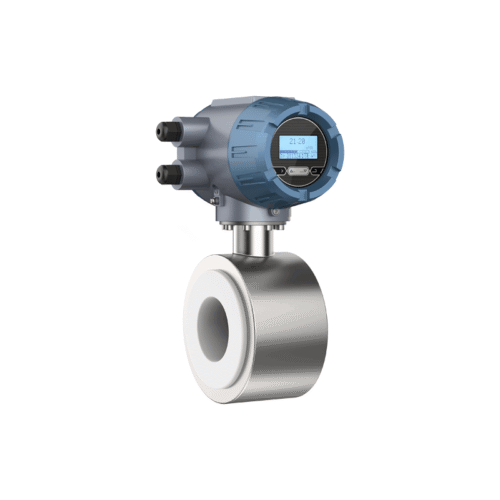
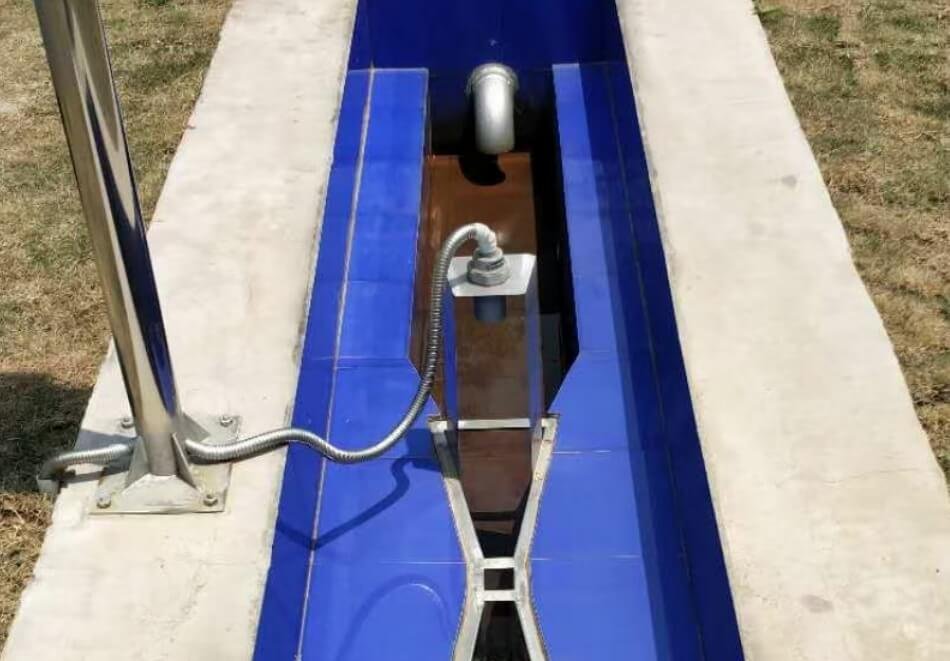
 The non-contact ultrasonic open-channel flowmeter comes in various styles, including integrated, split, handheld, and more.
Principle
The open channel flowmeter is based on the flow speed-water level calculation method, and uses advanced flow rate measurement sensors and water level measurement sensors. It is a new intelligent flow system that ensures speed measurement and calculation accuracy.
According to the width of the channel and measurement accuracy requirements, a mathematical model for flow measurement in open channels is adopted using the single-probe method or the multi-probe method. The working principle of an open channel flow meter is to measure the fluid level and then calculate the flow through the microprocessor inside the instrument.
The open channel flow device is launched and received under the control of a microcomputer. The distance between the open-channel flow instrument and the liquid surface to be measured is calculated based on the transmission time, thereby determining the liquid level height. Since there is a certain proportional relationship between the liquid level and the flow, the liquid flow can be obtained according to the calculation formula.
Suitable for various standard channel measurements.
- This product can be built in GPRS and Wifi to realize the Internet of Things (selected when ordering);
- It can measure material level, liquid level, volume, flow, etc.;
- Digital filtering and echo recognition functions;
- Fixed interference filtering function can be manually set;
- Support Bluetooth, GPRS communication, etc.(selected when ordering);
- Support Mini SD card data collection; USB output; micro printers; custom serial data format (selected when ordering);
1. water conservancy projects
River and channel flow monitoring:Used to monitor water flow in rivers and irrigation channels in real time.
Reservoir and lake water level and flow monitoring: Help manage water resources and flood control.
2. environmental monitoring
Sewage treatment plant: Monitor inlet and outlet water flow to ensure treatment results.
Rainwater drainage system: Monitor rainwater drainage to prevent waterlogging.
3. industrial production
Cooling water system: Monitor cooling water flow and optimize equipment operation.
Industrial wastewater emissions: Monitor wastewater emissions to ensure compliance.
4. agricultural irrigation
Irrigation channels: Monitor irrigation water volume in real time to improve water resource utilization efficiency.
5. urban drainage
Municipal drainage system: Monitor drainage flow to prevent waterlogging.
Combined drainage system: Monitor combined drainage to prevent overflow pollution.